

Blog
If you have been quoted for "sandwich panels", "insulated panels", "EPS panels" or "coolroom panels" and wondered whether they are four different products — they are usually the same thing. The name changes depending on who is selling it.
This guide explains what a sandwich panel actually is, how the core materials differ, where each type belongs — whether you need a sandwich panel roof, a sandwich panel wall or a full cold room — and what to check before you order in Australia.
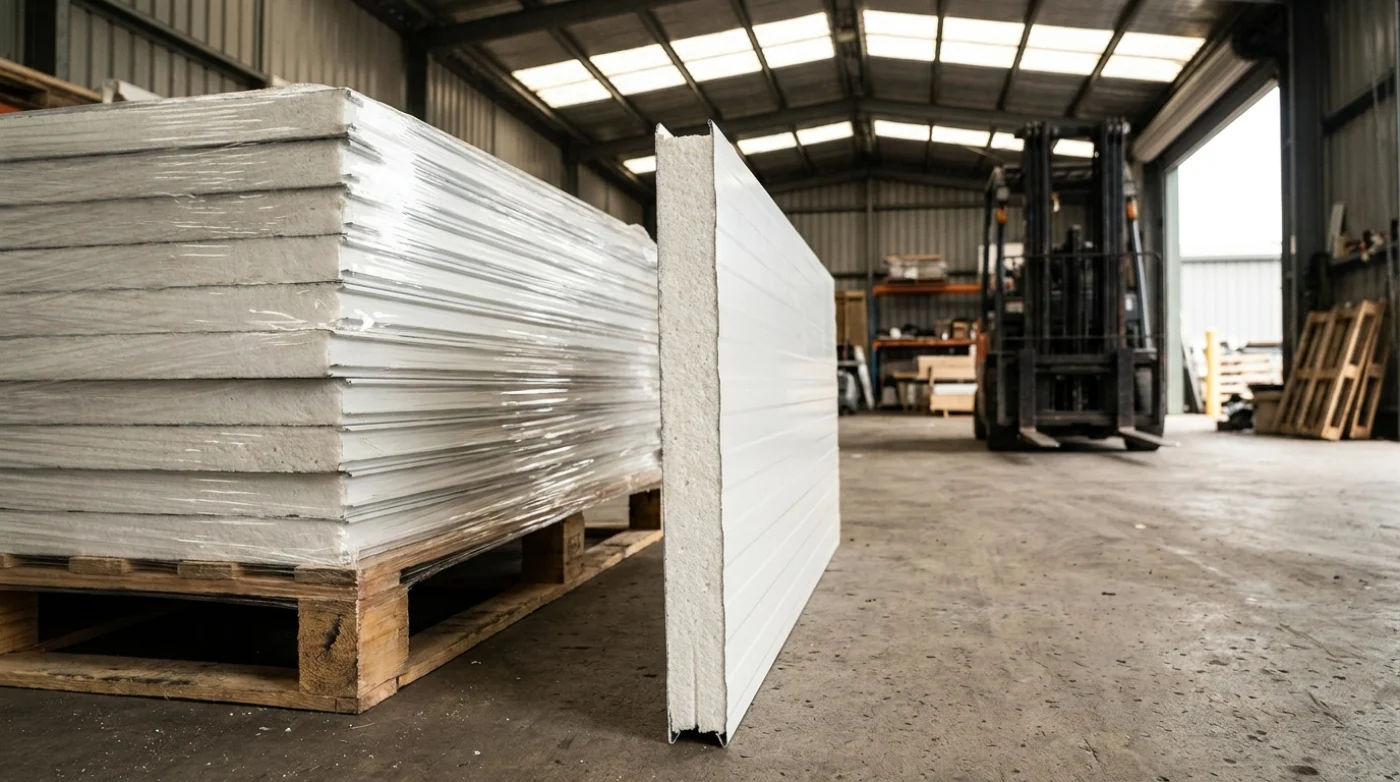
Sandwich panels: two structural skins bonded to an insulating core, delivered as one component.
What is a sandwich panel?
A sandwich panel is a composite building panel made of three layers: two thin, strong outer skins bonded to a thick, lightweight insulating core. The name is literal — the core is the filling.
The engineering trick is that the layers do different jobs. The skins take the tension and compression; the core holds them apart and resists shear. Separated by a core, two thin sheets behave like one much thicker, stiffer panel — at a fraction of the weight. It is the same principle as an I-beam, flattened out.
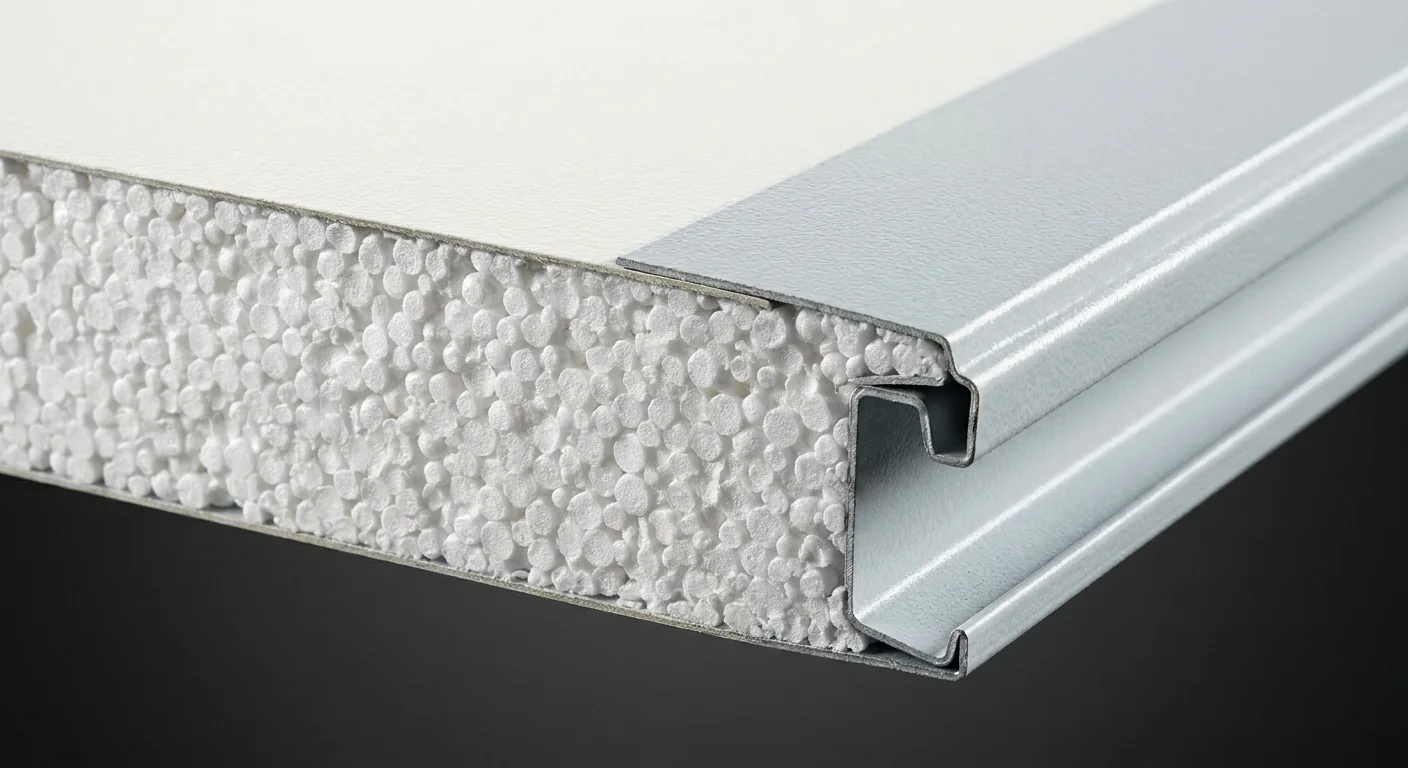
The three layers plus the Z-lock join — steel skin, bonded EPS core, steel skin. The interlock is what seals panel to panel.
Bonded is the key word. The core is structurally adhered to both skins across the whole face. That is what separates a sandwich panel from sheeting with insulation stuffed behind it — and it is why the panel does not sag, settle or leave gaps over time.
What are sandwich panels called?
Same product, different names depending on the industry:
- Sandwich panel — the engineering and construction term
- Insulated panel / insulated sandwich panel — general building supply
- EPS sandwich panel / PIR panel / PU panel — named after the core material. An EPS sandwich panel is simply a sandwich panel with an expanded polystyrene core.
- Coolroom panel / cold room panel / cool room insulation panels — refrigeration trade
- SIP (structural insulated panel) — residential construction, where the panel carries building load
If a supplier quotes you "sandwich panels" and another quotes "coolroom panels", you are almost certainly comparing the same thing. Compare the core material and thickness, not the name.
💡 The short version
- Sandwich panel = two skins + bonded core. Bonded is what makes it structural.
- The core decides everything — insulation, fire behaviour and price. Thickness alone is not the spec.
- EPS for general coolrooms, PIR for freezers and strict fire regs, PU in between.
- Compare cover width, not overall width — that is where quotes stop matching.
Core materials: EPS, PU and PIR
The core decides insulation performance, fire behaviour and price. These are the three you will actually be offered in Australia:
Full breakdown: EPS vs PIR vs PU compared
On fire and EPS: combustible-core panels have a real history in Australian commercial fires, and that history drives how they are regulated. This is not a reason to avoid EPS — it is a reason to declare the application honestly to your supplier and certifier. A cool room in a warehouse and a wall in an occupied commercial building are different compliance problems.
Where sandwich panels are used
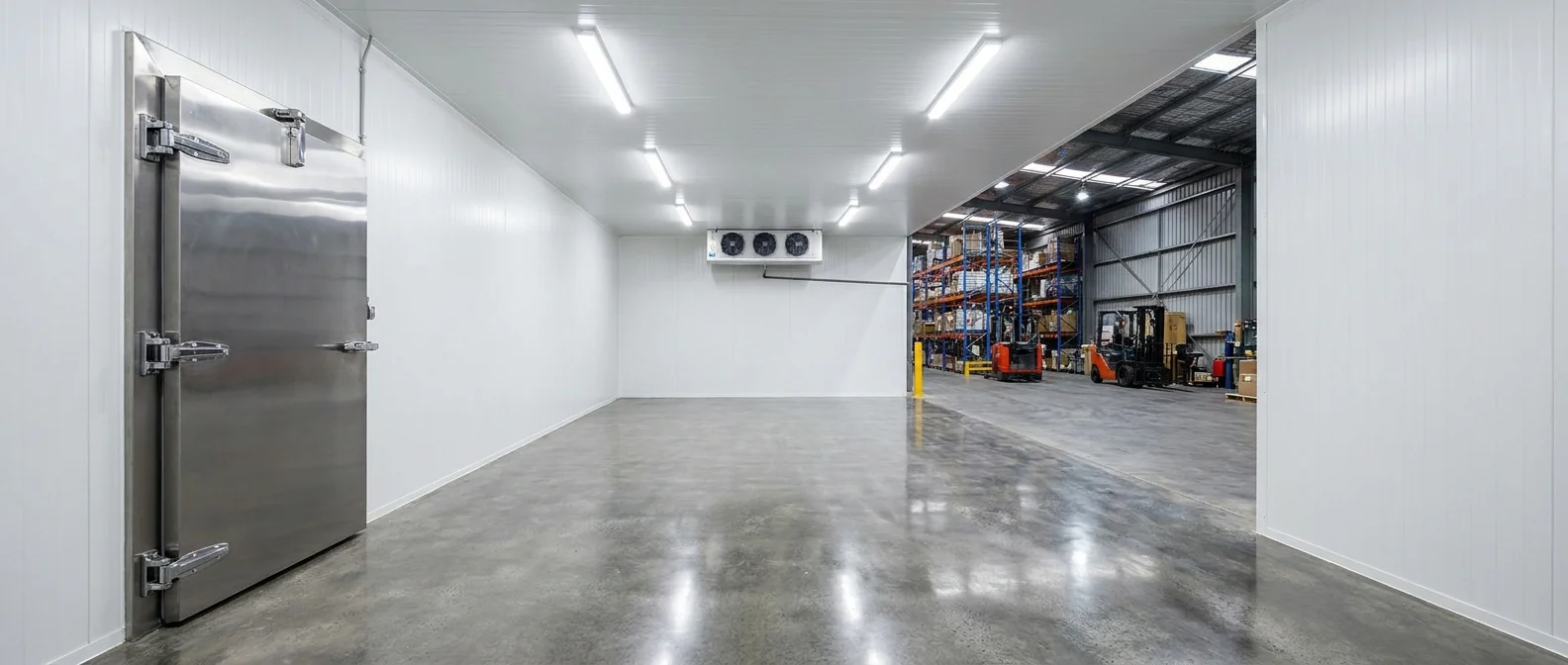
A finished commercial cool room — the panel is wall, insulation and wipe-clean interior in one.
The same panel shows up under a lot of different job names. What changes between applications is the core, the thickness and the skin finish — not the underlying product.
Below are the six applications we supply into most often across Australia.
Cool rooms & freezers
The original application. The panel is the wall, the insulation and the wipe-clean interior finish in one, with cam-lock joins that seal.
Sandwich panel roof
A sandwich panel roof gives you roof, insulation and finished ceiling in a single pass — no battens, no sarking, no lining trade, and far quieter in rain than bare steel.
Food processing & clean rooms
Sealed skins with no cavity give bacteria nowhere to live — which is what a food-safety audit is looking for.
Modular & prefab building
Light enough to handle without a crane, fast enough to close a building in days. This is where SIPs sit.
Sandwich panel wall & partitions
A sandwich panel wall splits a shed into temperature zones, or adding an office inside a warehouse, without a framed wall.
Agriculture
Produce storage, poultry sheds, wineries — anywhere temperature stability matters more than architectural finish.
What to check before you order
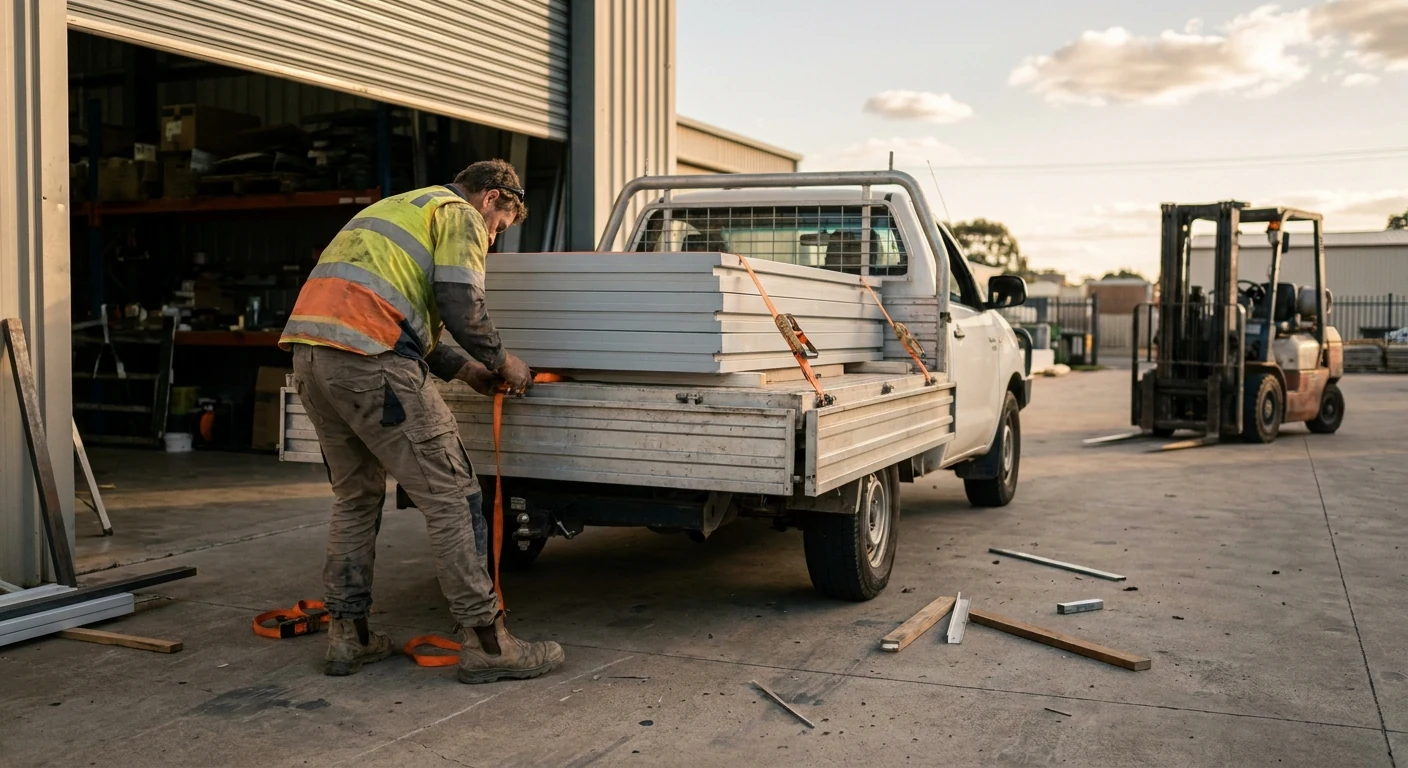
Six things worth confirming before a panel order is locked in.
1
Core material and thickness
Thickness alone is not the answer — a 100mm EPS panel and a 100mm PIR panel are not the same room. Match the core to the temperature you need to hold.
2
Skin thickness
Ask for it in millimetres. 0.4mm and 0.5mm steel are both sold as "steel skin", and they do not dent, span or last the same.
3
Join type
Cam-lock (Z-lock) joins pull panels together mechanically and seal. Cheaper panels sometimes rely on the fixing alone — that is where air leaks start.
4
Cover width vs overall width
Quotes are per square metre of cover. If you compare an overall-width price against a cover-width price you will get the count wrong.
5
Span capacity
How far the panel goes between supports depends on thickness and load. Ask for the span table — a supplier who cannot produce one is guessing.
6
Cut to length
Panels cut to your dimensions mean less waste and less on-site cutting. Confirm whether cutting is included or extra.
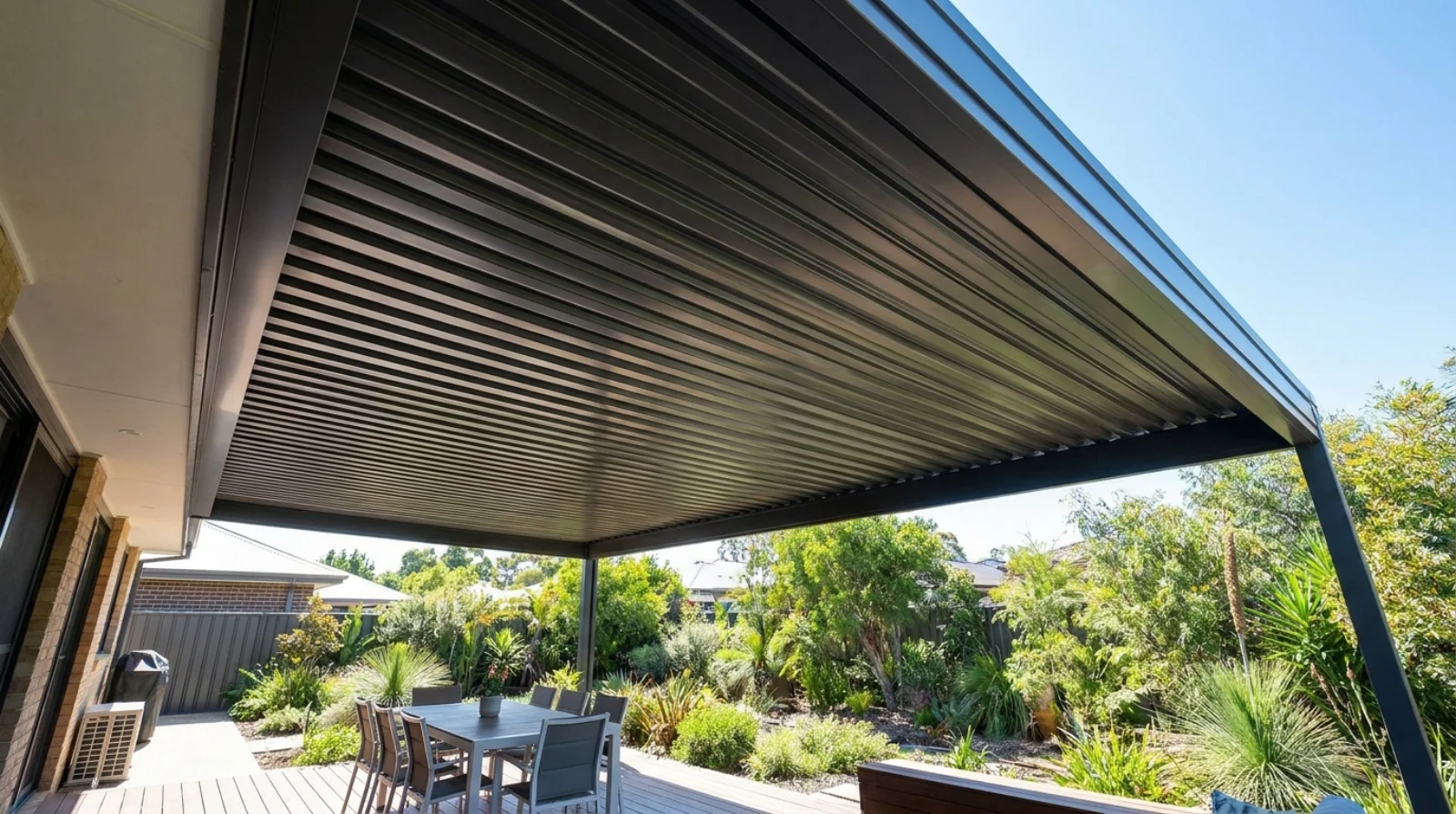
A sandwich panel roof: structure, insulation and finished ceiling delivered in one pass.
Sandwich panel vs conventional construction
Comparison is qualitative and reflects typical Australian builds.
FAQ: sandwich panels
What is a sandwich panel made of?
Three bonded layers: two thin structural skins (usually steel, sometimes aluminium) either side of an insulating core — EPS, PU or PIR. The bond between core and skins is what gives the panel its strength and stops it separating over time.
Are sandwich panels and coolroom panels the same thing?
Usually yes. "Coolroom panel" is the refrigeration trade's name for an insulated sandwich panel. Compare core material and thickness rather than the product name.
How thick should a sandwich panel be?
50mm EPS suits most standard cool rooms (0–5°C). Go to 75mm for hot sites or high door traffic, and 100mm PIR for freezers down to −18°C. For walls and partitions, 35mm is often enough.
Are sandwich panels structural?
They span between supports and carry their own weight plus wind and live loads within their span rating, but most are not designed to carry building loads. Panels that do are called SIPs (structural insulated panels). Always work to the span table.
Are sandwich panels a fire risk?
It depends entirely on the core. PIR performs best, EPS is combustible and comes in fire-retardant grades. What matters is declaring the real application so the right core and certification are specified.
Can I install sandwich panels myself?
Cam-lock panels are designed to be assembled with basic tools and are light enough for two people. See our cool room installation guide. Refrigeration plant must be connected by a licensed mechanic.
Do you supply sandwich panels across Australia?
Yes — we manufacture and stock EPS panels in Adelaide, cut to length, and freight Australia-wide. Send your dimensions for a delivered price.
Need sandwich panels for your build?
Tell us the application, the temperature you need to hold and your dimensions. We will come back with core, thickness, quantities and a delivered price.
