

Use Case

EPS insulated panels are one of the most widely used building materials in Australian commercial refrigeration and construction. But installing them correctly — and avoiding the mistakes that cost time and money — means understanding a few fundamentals that are not always obvious from the product label.
This guide covers everything from panel selection to fixing methods, thermal performance, and what to check before you buy.
What Is an EPS Panel?

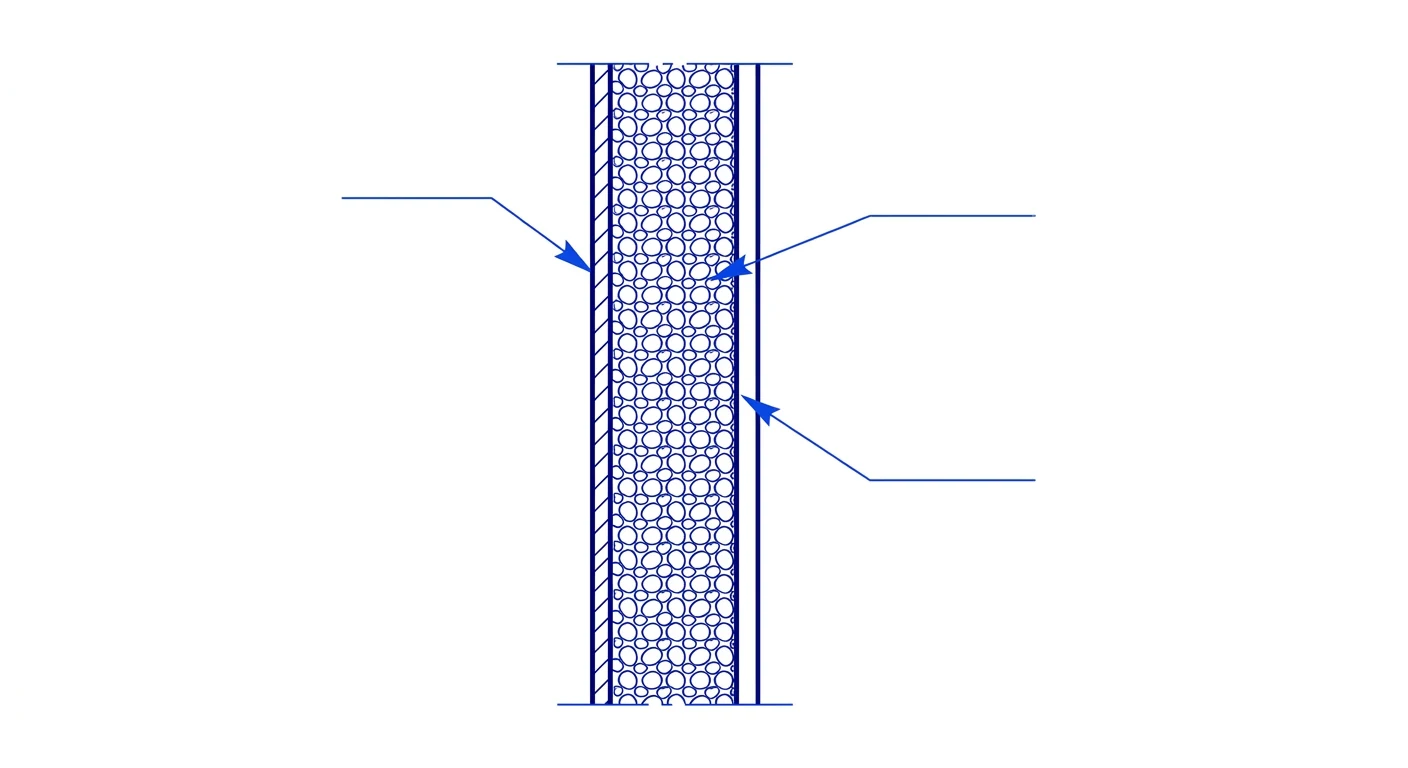
EPS stands for Expanded Polystyrene. Unlike PIR (Polyisocyanurate), which uses a chemical blowing agent to achieve higher thermal resistance per millimetre, EPS achieves its insulating properties through trapped air captured in expanded polystyrene beads — the same material as packing foam, but in a rigid, high-density structural panel format.
Typical EPS panel density for commercial cool room use: 12–15 kg/m³. Densities below this are not structural enough for wall and ceiling applications. At 15 kg/m³, a 50mm panel delivers an R-value of approximately 1.8 m²·K/W.
Panel Sizes and Cover Widths
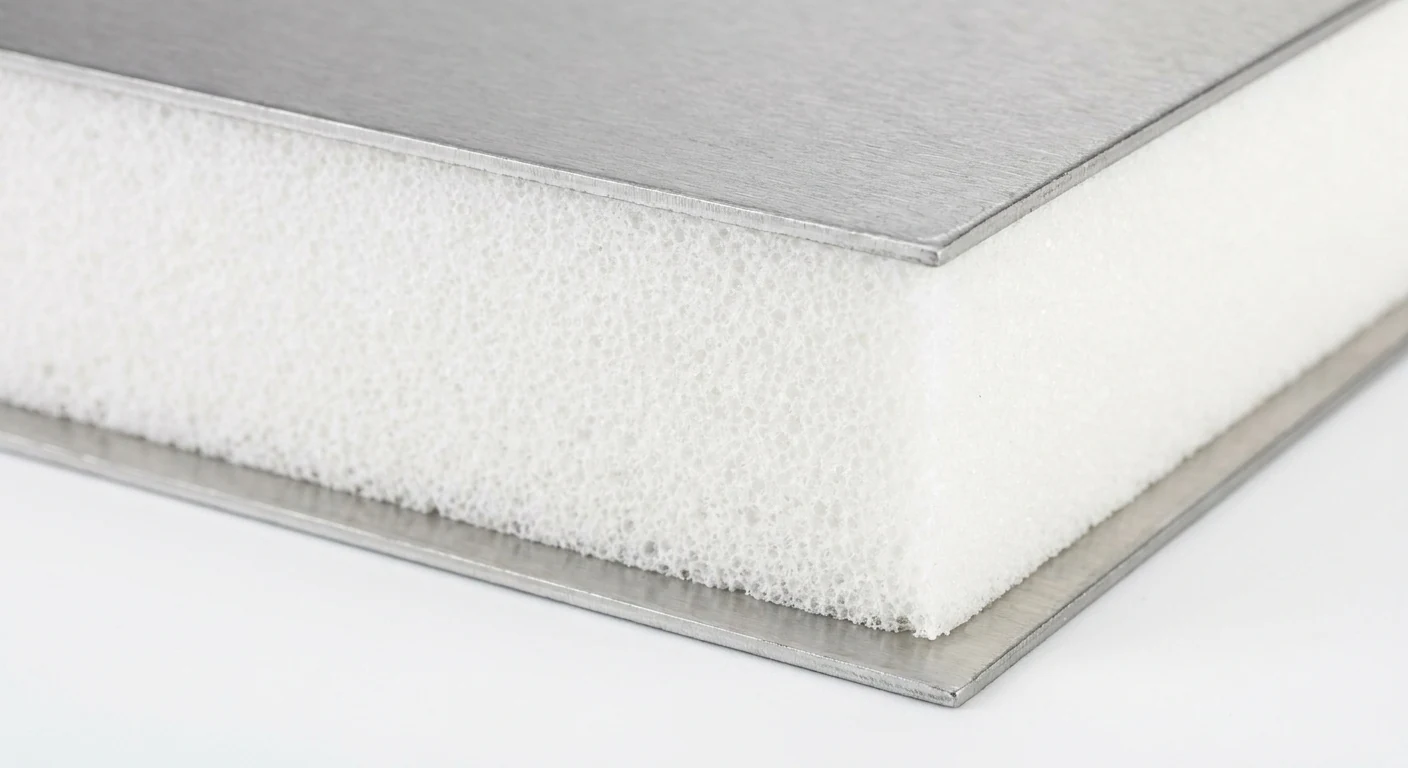
In the Australian market, the most common EPS panel dimensions are:
| Thickness | Cover Width | Typical Lengths | Best Use |
|---|---|---|---|
| 35mm | 1150mm | 2.4m, 3.0m | Internal partitions, low-temperature storage |
| 50mm | 1150mm | 2.4m–6.0m | Standard cool rooms (2–8°C) |
| 75mm | 1150mm | 3.0m–6.0m | Commercial freezers, high-heat environments |
| 100mm | 1150mm | 3.0m–6.0m | Industrial freezers below -25°C |
How EPS Panels Are Fixed

Mechanical Fixing vs. Adhesive Only
For wall panel installation, use both adhesive and mechanical fasteners. Adhesive alone is insufficient in most commercial applications because panel joints experience lateral stress during thermal expansion and contraction. A combined system works as follows:
- Apply construction-grade adhesive to the structural support channels (purloins or steel frame)
- Fit the panel Z-lock joint onto the previous panel
- Secure the exposed face with a stainless steel washer-head screw through the panel web at 400mm centres
- Seal all joints with neutral-cure silicone or PE foam tape
Ceiling Installation
Ceiling panels carry their own weight plus any maintenance foot traffic. The fixing method depends on whether the panels are spanning perpendicular or parallel to the structural joists:
Do not span ceiling panels more than 1.5m without intermediate support. EPS panels are not structural and will sag under load. If your joist spacing is greater than 1.5m, install additional purloins or specify a thicker panel profile.
Thermal Performance: What the Numbers Actually Mean
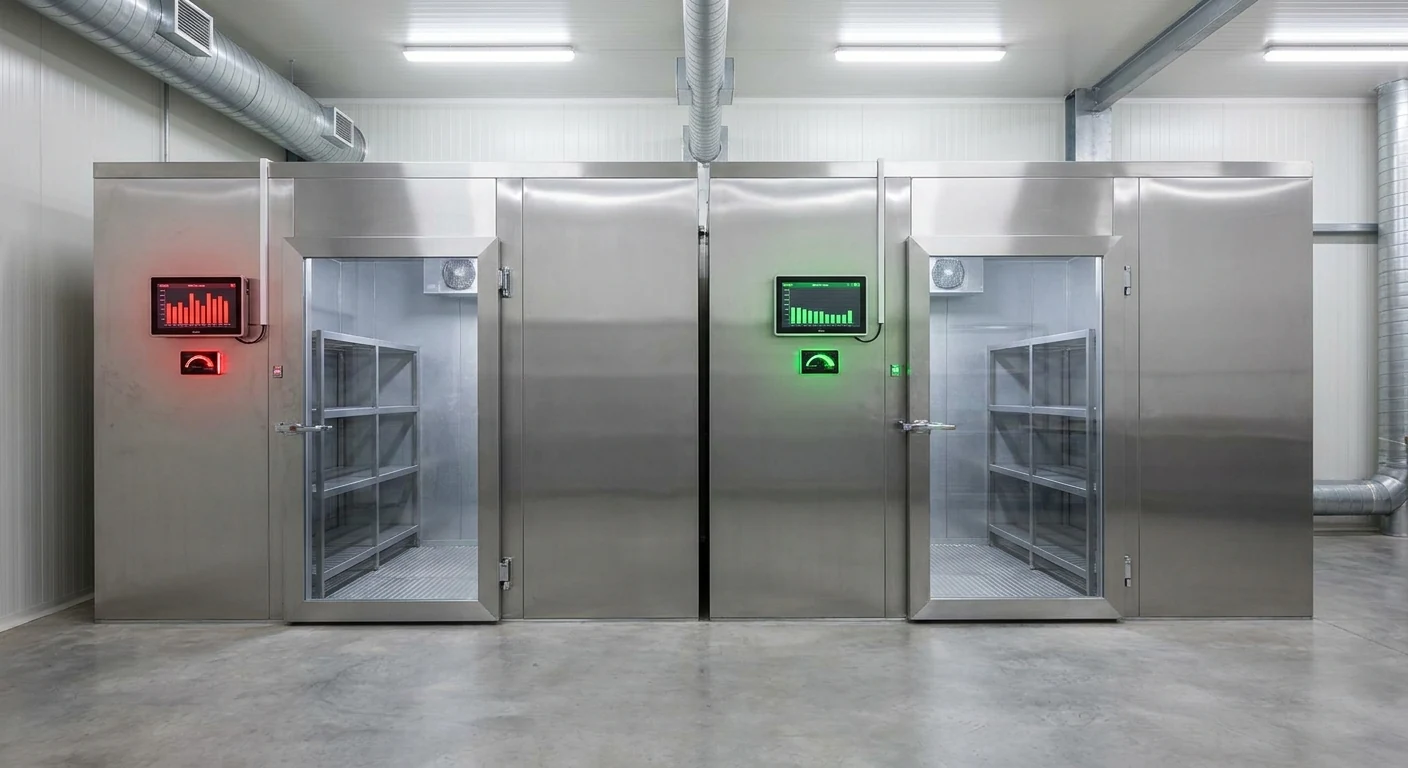
One of the most common misunderstandings is conflating panel thickness with thermal performance. The relationship is not linear:
| Panel Type | Thickness | R-value (m²·K/W) | Equivalent in Glass Wool (mm) |
|---|---|---|---|
| EPS | 50mm | 1.8 | ~90mm |
| EPS | 75mm | 2.7 | ~135mm |
| EPS | 100mm | 3.6 | ~180mm |
| PIR | 50mm | 2.5 | ~125mm |
| PIR | 75mm | 3.75 | ~190mm |
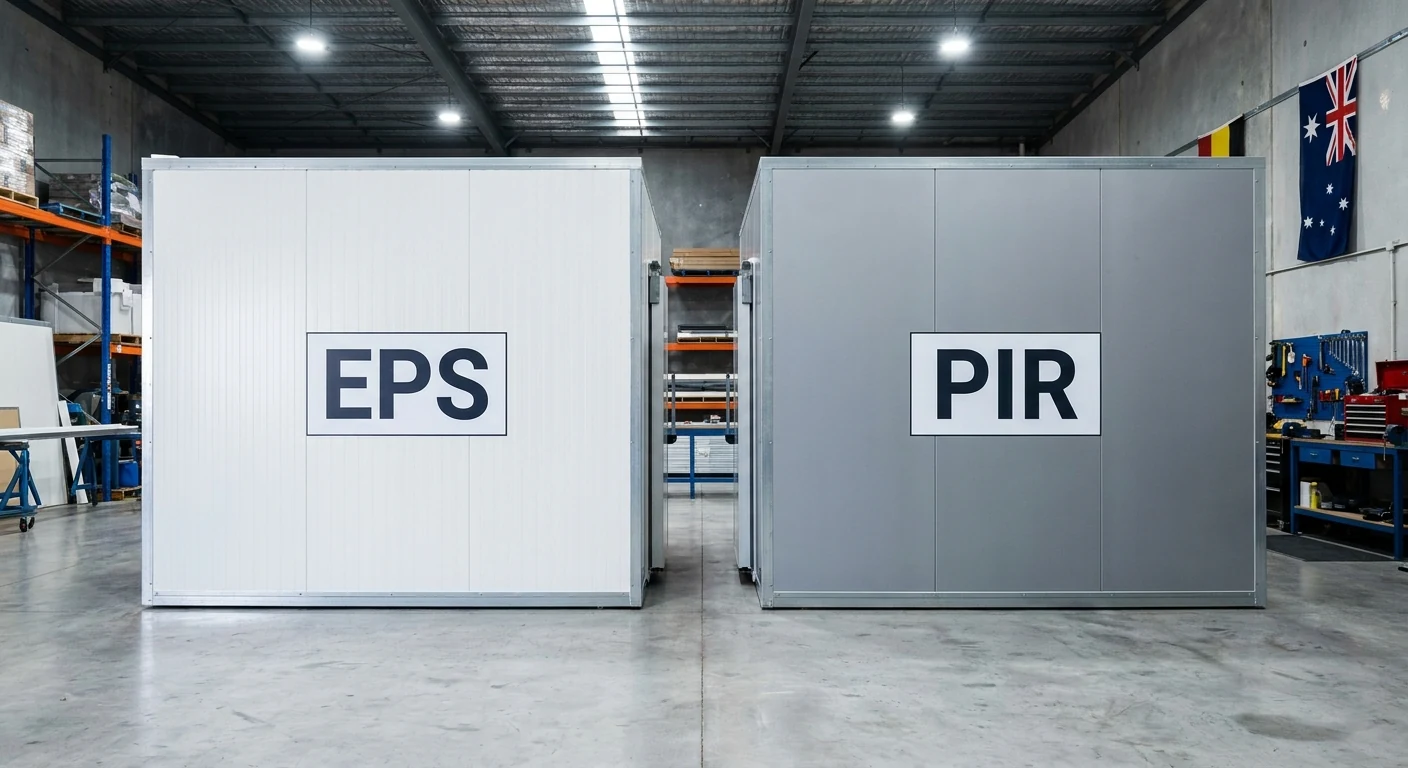
Note that 75mm EPS is roughly equivalent in thermal performance to 50mm PIR. When comparing prices, compare on an R-value-per-dollar basis — not just thickness alone.
Adelaide and South Australian Conditions
Adelaide experiences more extreme temperature swings than coastal cities. Summer maxima of 40°C+ in the Adelaide Hills and mid-north are not unusual, while winter overnight temperatures can drop below 5°C. This thermal cycling puts greater stress on panel joints than in more humid coastal climates.
For South Australian commercial installations, we recommend:
- 75mm panels minimum for any cool room operated year-round in un-air-conditioned environments
- Silicone-sealed joints rather than PE foam tape — silicone handles thermal cycling better over time
- Stainless steel fixings throughout — coastal proximity (even 20km from the coast) accelerates corrosion on standard galvanised washers
Common Installation Mistakes
Incorrect cover width calculation: Always calculate using the effective cover width (typically 1150mm), not the overall panel width. Using the overall width results in ordering 10–15%% more panels than needed.
Cutting panels with the wrong blade: EPS panels must be cut with a fine-tooth saw blade or hot wire cutter. A coarse wood blade causes surface chipping and compromises the sealing surface at joints.
Installing wall panels before the floor is done: Always install and seal the floor panels before starting walls. This prevents thermal bridging through the bottom rail and reduces condensation ingress from below.
How to Order EPS Panels for Your Project
To get an accurate panel quantity and supply quote, have the following ready:
- Room dimensions (length × width × height in metres)
- Target internal temperature (2–8°C cool room, -18°C freezer, etc.)
- Panel thickness preference
- Door positions and sizes
- Your location/postcode (for freight calculation)
Send us these details and we will provide a fixed-price supply quote within one business day.
Need a Panel Quote?
Message us with your room dimensions and location — we will get back to you within one business day.
FAQ
Can EPS panels be used for external wall cladding?
EPS panels are not designed for exposed external use — they degrade under UV exposure and are not fire-rated for external applications without additional cladding. For external insulated walls, consider a composite panel with a metalised foil outer skin or a PIR panel system.
What is the lifespan of an EPS panel installation?
Properly installed and protected from UV and mechanical damage, EPS panels in a closed cool room environment will typically last 15–20 years before any meaningful degradation in thermal performance. Joint sealants may need reapplication at the 8–10 year mark depending on the environment.
EPS vs PIR: which should I choose?
Choose EPS for standard cool room applications (2–8°C), cost-sensitive projects, and DIY installations. Choose PIR if you need fire-rated panels for council compliance, operate below -10°C, or require higher thermal performance in a thinner profile. For most Australian food storage applications, EPS is the practical choice.
