

Use Case
In Adelaide, the single biggest mistake we see on freezer builds is treating a freezer room like a slightly colder cool room. It isn’t. A cool room holds produce at 0–5°C. A freezer runs at −18 to −25°C — a 25°C deeper pull against 40°C-plus summer ambients. That gap is exactly why freezer room panels in Adelaide should start at 100mm, not the 75mm that happily serves a chiller.
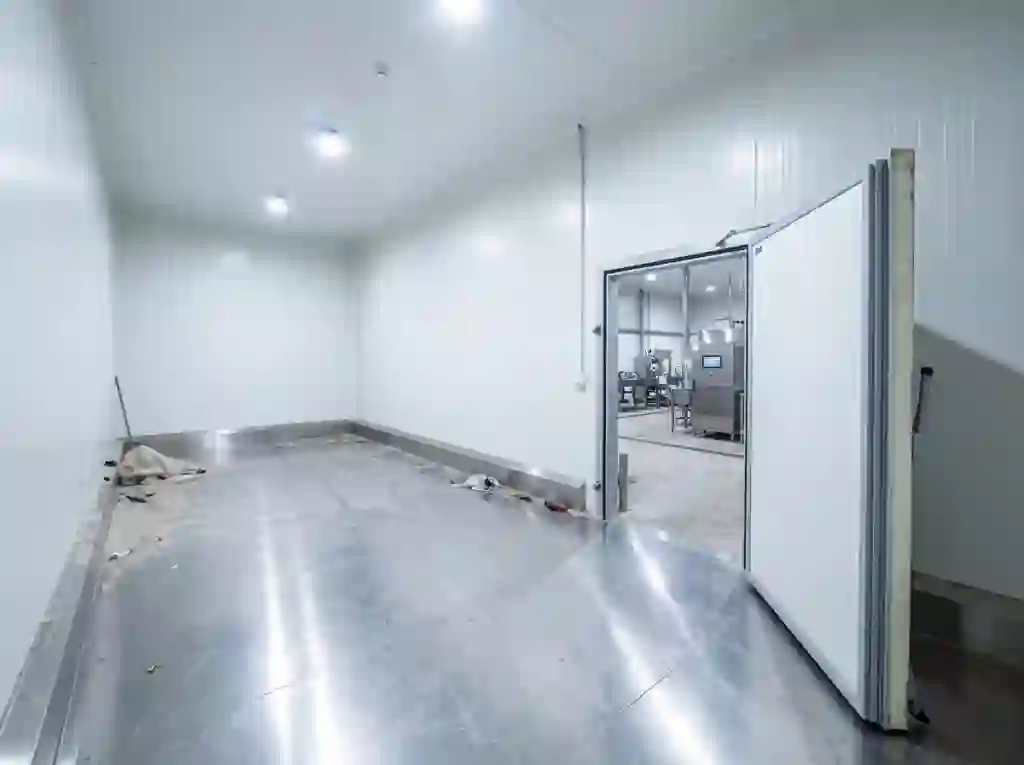
Cool room vs freezer: the line that changes the spec
Insulation demand scales with the temperature difference the wall has to hold. Hold 5°C against a 38°C Adelaide afternoon and you fight a 33°C gap. Hold −22°C and that gap jumps past 60°C. Thin panels that cope as a cool room will sweat, ice up at the joints and run the compressor flat out in a freezer.
Rule of thumb: cool room 0–5°C → 75mm is fine. Freezer −18°C or colder → 100mm minimum, 150mm for blast or low-temp.
Panel thickness vs R-value
All our panels use EPS core (λ ≈ 0.036 W/mK), so R-value rises in a straight line with thickness:
| Thickness | R-value | Best for |
|---|---|---|
| 50mm | R1.39 | Partitions, light chillers |
| 75mm | R2.08 | Standard cool rooms (0–5°C) |
| 100mm | R2.78 | Freezers (−18 to −25°C) |
| 150mm | R4.17 | Blast freezers, low-temp storage |
Jumping 75mm→100mm lifts R by ~34% for roughly a third more core — cheap insurance against a freezer that can’t hold set-point in February.
Why 100mm is the Adelaide freezer floor
Adelaide’s summer design temperatures are brutal on refrigeration. Under-spec the wall and three things follow: the plant short-cycles and wears, energy bills climb as the unit never rests, and condensation forms where warm air meets a too-cold inner skin — the start of mould and panel delamination.
Watch the roof. Heat load is highest overhead. If walls are 100mm, don’t drop the ceiling to 75mm to save a dollar — match or exceed the wall R-value up top.
The details that fail first
- Floor: freezers need an insulated floor (often 100mm+); an un-insulated slab heaves and ices.
- Doors: use a rated freezer door with heater trim on the frame to stop ice-up.
- Vapour seal: every joint must be sealed warm-side; one gap lets moisture track into the core.
- Pressure relief: a freezer needs a relief vent, or door seals fight a vacuum each cycle.
What freezer panels cost in Adelaide
Expect to pay more per square metre than a cool room purely on the thicker core and freezer-rated hardware — but the running-cost saving over a decade usually dwarfs the up-front gap. For current per-panel and per-room numbers see our 2026 Adelaide pricing guide and the full cool room cost breakdown. Planning a hospitality fit-out? Start with the commercial cool room guide.
FAQs
Can I use 75mm panels for a freezer?
You can, but we don’t recommend it below −15°C. At freezer temps 75mm (R2.08) lets the plant run too hard and invites condensation. 100mm (R2.78) is the practical minimum.
What thickness for a blast freezer?
150mm (R4.17) walls, ceiling and floor. Blast work pulls product down fast and demands the lowest, most stable box temperature.
Do freezer floors need insulation?
Yes. An un-insulated freezer floor draws heat from the ground, ices up and can heave the slab. Insulated floor panels or a layered slab are standard.
Will thicker panels really cut power bills?
In Adelaide’s climate, yes. Less heat gain means fewer compressor hours. The R-value step from 75mm to 100mm typically pays back well inside the plant’s life.
Building a freezer in Adelaide?
Get 100mm and 150mm freezer panels cut to size, plus freezer-rated doors and trims. See the installation guide or talk specs with our team.
