

Use Case
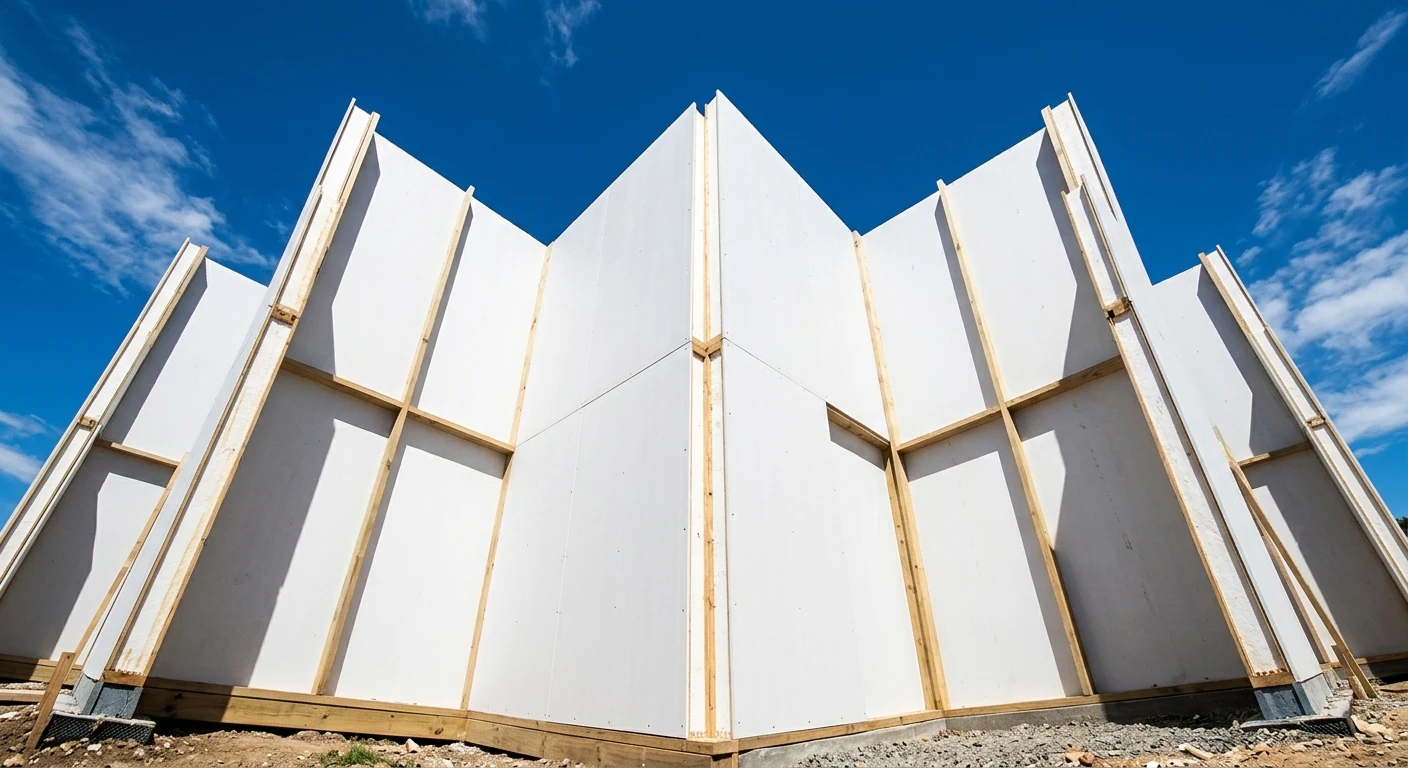
TL;DR: Structural Insulated Panels (SIPs) build homes up to 60% faster, cut ongoing energy bills by up to 60%, and are fully aligned with Australia’s 2026 National Construction Code energy targets. For owner-builders and commercial projects alike, SIPs are fast becoming the smart default.
Australia is in the middle of a building revolution — and it’s happening panel by panel. With a chronic housing shortage, rising energy costs, and the federal government’s commitment to net-zero emissions by 2050, builders and developers are looking hard at alternatives to the decades-old timber-frame-and-batts approach. Structural Insulated Panels (SIPs) are emerging as the standout answer.
In this guide we break down exactly what SIPs are, why government policy is now tailwind rather than headwind, and how they stack up against traditional construction across every metric that matters — speed, cost, energy, durability, and sustainability.
What Are SIP Panels?
A Structural Insulated Panel (SIP) is a high-performance building system consisting of a rigid insulating foam core — typically expanded polystyrene (EPS) or polyisocyanurate (PIR) — permanently bonded between two structural facing boards, usually oriented strand board (OSB). The result is a single composite element that is simultaneously the wall (or roof) structure, the insulation layer, and the air barrier.
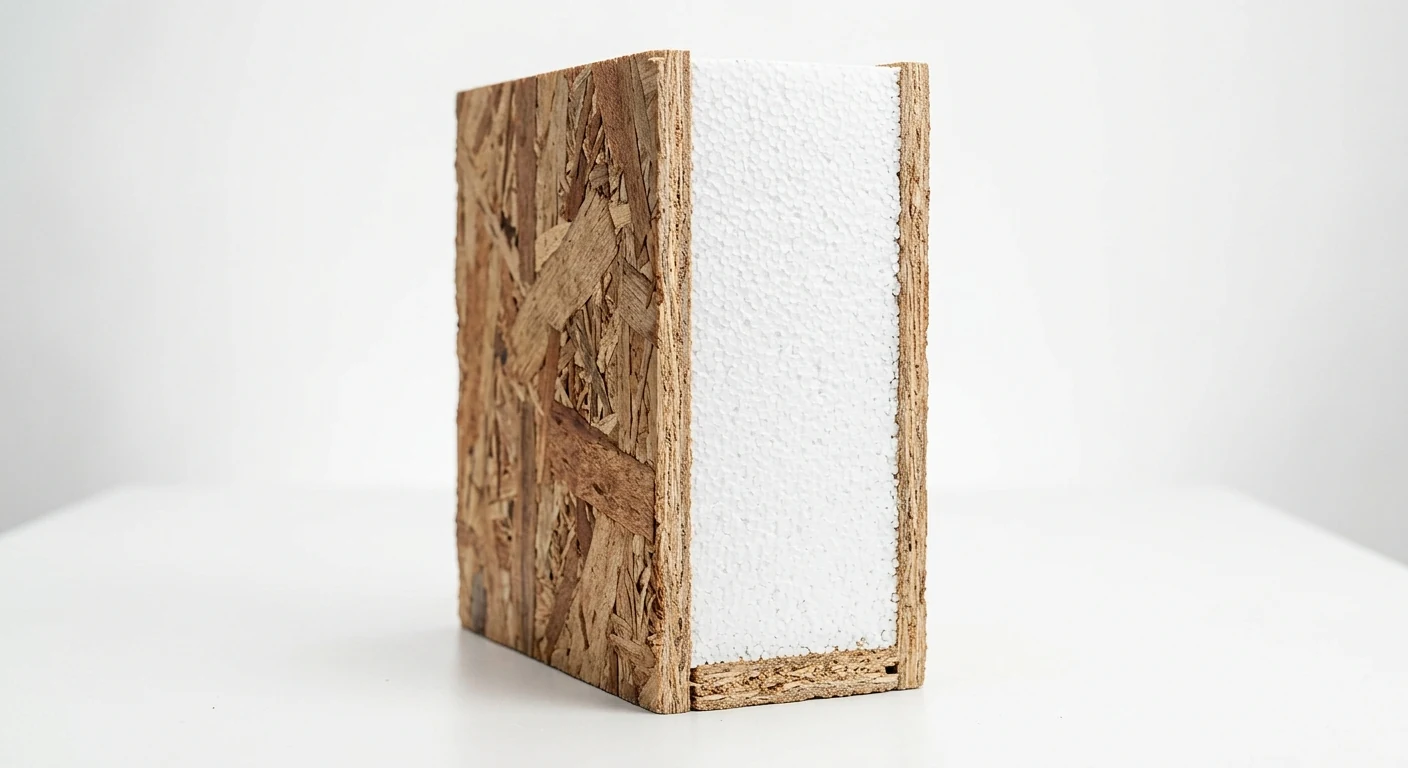
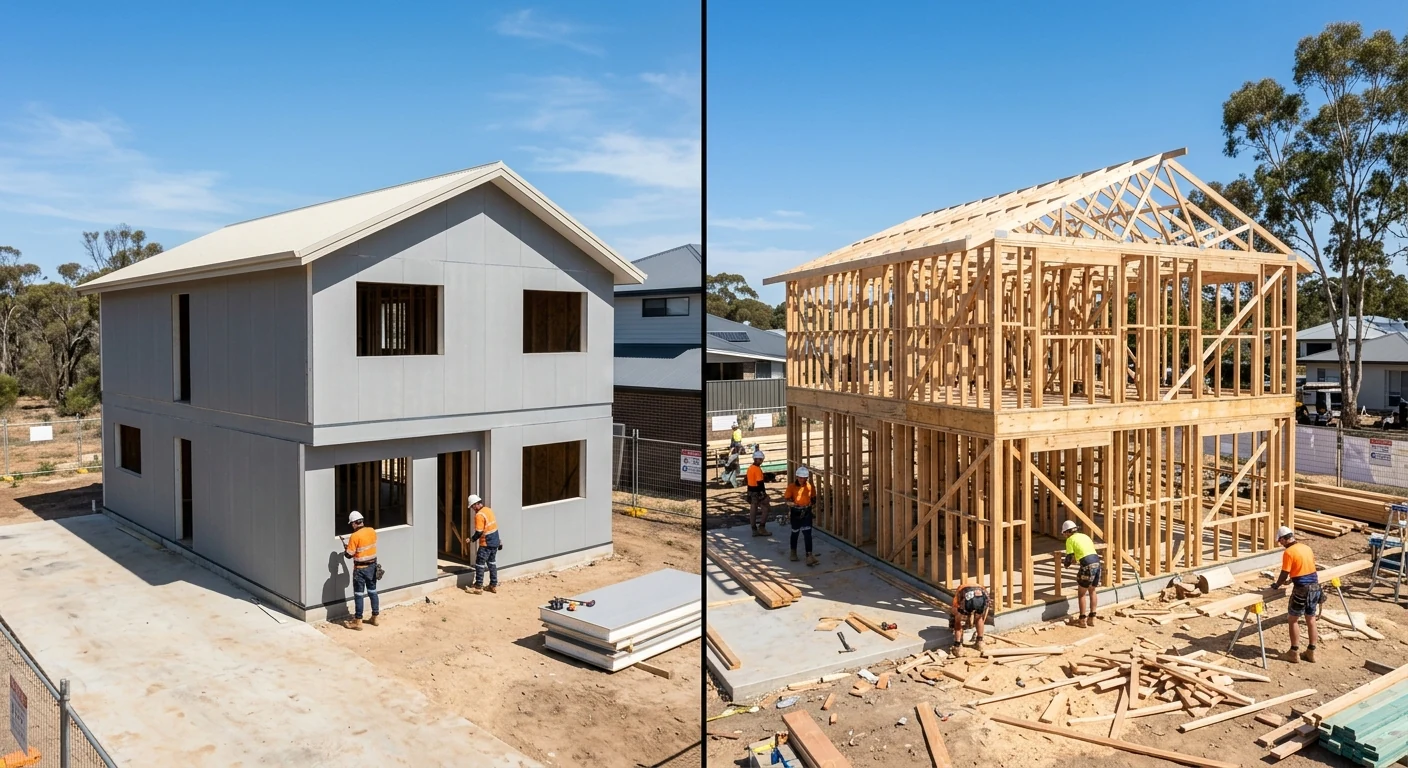
SIPs are precision-manufactured off-site to exact dimensions, pre-cut for windows and doors, and arrive on site ready to assemble — much like building with large, perfectly fitted Lego bricks. This is fundamentally different from stick-frame construction, where studs, insulation, and sheathing are assembled piece by piece on site.
Common SIP Applications in Australia
- Residential homes (single and double storey)
- Granny flats and secondary dwellings
- Commercial buildings and offices
- Cool rooms and controlled-atmosphere storage
- Bushfire-zone (BAL-rated) construction
- Remote and off-grid builds where energy efficiency is critical
Australian Government Policy: A Clear Tailwind for SIPs
Federal and state governments aren’t picking SIPs by name, but the policy environment they’ve created in 2025–2026 rewards exactly what SIPs deliver.
National Construction Code (NCC) 2022 — Energy Efficiency Uplift
The NCC 2022 raised the minimum energy-efficiency star rating for new homes from 6 to 7 stars NatHERS (Nationwide House Energy Rating Scheme). Most traditional timber-frame builds require significant additional insulation layers and careful detailing to hit 7 stars. SIPs achieve it as a baseline, without the complexity.
Net Zero by 2050 — Building Sector Targets
Australia’s commitment to a 43% emissions reduction by 2030 and carbon neutrality by 2050 puts the spotlight squarely on buildings, which account for roughly a quarter of national energy consumption. The federal government’s Future Homes Initiative and the $32 billion Housing Australia Future Fund both explicitly prioritise construction methods that reduce operational energy use — a box SIPs tick with room to spare.
State-Level Support
- SA: Home improvement grants and retrofitting incentives favour high-performance envelopes
- VIC: Better Building grants for commercial and multi-residential projects reward energy-efficient construction
- QLD & NSW: Prefabrication and modular construction strategies both push toward off-site precision manufacturing — exactly how SIPs are made
Bottom line: SIPs meet or exceed every current and pending energy code requirement in Australia. Future-proofing your build with SIPs now means you won’t need costly retrofits when the NCC tightens further in 2028.
SIP Panels vs Traditional Construction: Side-by-Side
| Factor | SIP Panels | Traditional Timber Frame |
|---|---|---|
| Construction speed | Wall + roof shell in as little as 5 days | Weeks of frame, insulation, and sheathing |
| Energy efficiency | Up to 60% more efficient; no thermal bridging | Thermal bridging at every stud; higher energy bills |
| NatHERS star rating | 7–9 stars achievable as standard | Often requires extra detailing to reach 7 stars |
| Material cost | ~5% higher than timber frame | Lower upfront material cost |
| Labour cost | Significantly lower (fewer trades, faster build) | High — multiple separate trades over longer period |
| On-site waste | Minimal — panels arrive pre-cut | High — off-cuts, packaging, miscuts common |
| Structural strength | Continuous diaphragm — very high racking strength | Point-load at studs; more connections required |
| Fire resistance | Approvable in BAL zones with correct spec | Standard timber requires added protection in BAL zones |
| Pest resistance | EPS/PIR core is termite-resistant | Timber studs vulnerable without chemical treatment |
| Dimensional accuracy | Near-millimetre perfect — joinery fits first time | Site variations common; shimming required |
| Lifespan | 50–70+ years with correct detailing | Varies; moisture issues can shorten lifespan |
| Design flexibility | Good — custom shapes, curves need specialist work | Excellent — highly flexible for complex designs |
The Advantages in Detail
1. Speed — A 4-Bedroom Shell in Under a Week
Because SIPs arrive pre-cut and pre-dimensioned, a typical single-storey 4-bedroom home can be weather-tight within 3–5 working days of the panels arriving on site. Compare that to timber frame construction, which typically takes 3–6 weeks to reach the same stage. Faster builds mean lower holding costs, earlier rental or sale income, and reduced exposure to weather delays.
2. Energy Efficiency — 60% Better, No Extra Work
Traditional stick framing creates thermal bridges at every stud — points where heat bypasses the insulation and flows through the structural timber. With SIPs, the insulation core is continuous and uninterrupted. Independent testing consistently shows SIP homes use 40–60% less energy for heating and cooling than equivalent timber-frame homes, without any special HVAC systems or supplementary insulation layers.
60%
Less energy use vs timber frame
5 days
To a weather-tight shell
7–9★
NatHERS rating achievable
50–70 yrs
Expected panel lifespan
3. Structural Performance — Stronger Than the Sum of Its Parts
A SIP acts as a stressed-skin structural diaphragm, meaning the load is distributed across the entire panel surface rather than concentrated at individual studs. This gives SIP structures excellent racking resistance (important in cyclone and earthquake zones) and allows larger open spans without intermediate columns — useful for open-plan floor plans.
4. Bushfire Resilience (BAL Zones)
With correctly specified facings and appropriate junctions, SIP panels can be engineered to comply with requirements for BAL 12.5, BAL 19, and in some configurations BAL 29 zones — a critical consideration for regional and rural builds in South Australia, Victoria, and Queensland. The EPS/PIR core does not support combustion once the facing boards are in place.
5. Sustainability and Waste Reduction
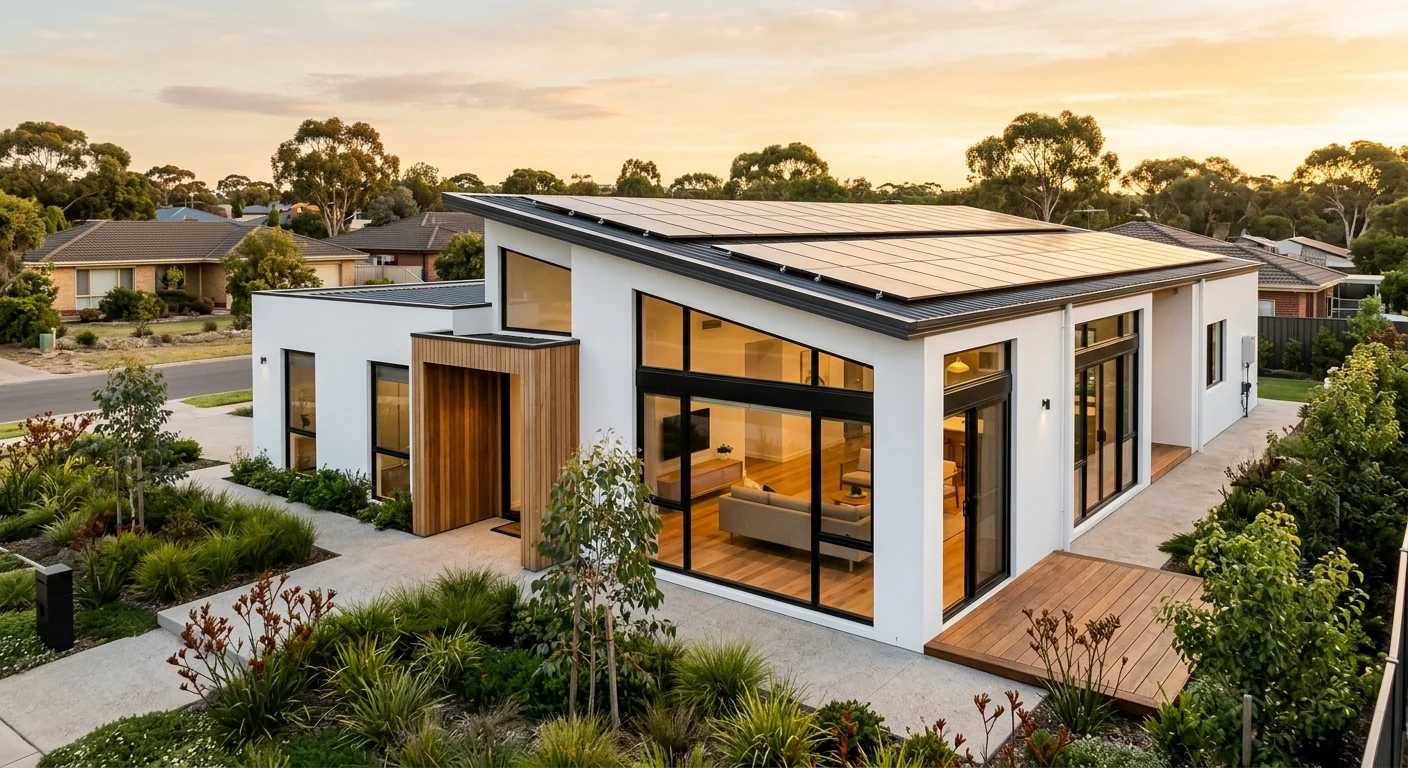
Off-site manufacturing means SIPs generate a fraction of the construction waste that timber-frame sites produce. Factory offcuts are recycled, packaging is minimised, and there are no miscut studs ending up in a skip bin. Combined with the dramatic reduction in lifetime energy use, the whole-of-life carbon footprint of a SIP home is substantially lower than a conventional build.
What Does It Cost? Honest Numbers
SIP panels cost approximately 5–8% more in materials than equivalent timber-frame construction. However, that upfront premium is typically recovered within the build itself through:
- Lower on-site labour costs (fewer trades, faster completion)
- Reduced waste disposal costs
- Lower or eliminated costs for separate air-barrier and insulation installation
- Smaller HVAC systems (smaller heating/cooling load)
Over the life of the building, the energy savings compound significantly. A household saving $1,200/year in energy bills recoups a $10,000 material premium in under 9 years — and keeps saving for the 40+ years after that.
Watch out: SIP panel quotes can vary significantly depending on panel thickness, facing type, and factory location. Always compare quotes on a like-for-like specification — not just $/m².
Our recommendation: For any new residential or commercial build targeting 7+ NatHERS stars, bushfire zones, or remote/off-grid locations — SIPs deliver the best total-cost outcome in 2026. If your design is highly complex with many curves and angles, a hybrid approach (SIPs for walls and roof, timber for bespoke elements) often makes sense.
Frequently Asked Questions
Do SIP panels meet Australian Building Standards?
Yes. SIPs can be designed and certified to meet the National Construction Code (NCC), Australian Standards AS 1170, and NatHERS requirements. Most leading SIP suppliers in Australia hold current engineering assessments and CodeMark or WaterMark certificates where applicable.
Can SIPs be used for cool rooms and cold storage as well as residential builds?
Yes — insulated panels are widely used in commercial cool rooms, refrigerated warehouses, and controlled-atmosphere storage. The core insulation principles are the same; the panel specification differs by required thermal performance (R-value) and facing material (steel-faced panels for food-grade environments vs. OSB for residential). Cool Room Masters supplies both residential SIP-style panels and heavy-duty cool room panels.
Are SIP homes prone to moisture problems?
Correctly detailed SIP buildings are highly airtight, which actually reduces moisture ingress compared to drafty timber-frame buildings. The key is correct vapour management at junctions and penetrations. Work with a builder experienced in SIP detailing — this is not an area to cut corners.
How do SIPs handle electrical and plumbing runs?
Most SIPs are manufactured with pre-routed conduit channels for electrical wiring. Plumbing is typically run in internal (non-SIP) walls or in a services cavity. This requires upfront planning but results in a cleaner, more airtight wall assembly than drilling through studs after the fact.
Can I owner-build with SIP panels?
Yes — SIPs are particularly popular with owner-builders in Australia because the panel assembly is straightforward, documentation is thorough, and the fast erection time reduces the window in which an inexperienced builder is exposed to weather. That said, owner-builders should engage a licensed builder or building surveyor to oversee structural connections and critical junctions.
What thickness SIP panel do I need?
Wall panels typically range from 114 mm to 168 mm depending on climate zone and target NatHERS rating. Roof panels are often thicker — 168 mm to 230 mm — as roofs carry the highest thermal load. An energy assessor can specify the minimum thickness for your climate zone, but going one step thicker is almost always worth the marginal cost increase for long-term comfort.
Need Insulated Panels for Your Project?
Cool Room Masters supplies high-performance EPS and PIR insulated panels across South Australia and nationally. Whether you’re building a cool room, a warehouse, or need advice on panel specifications for a residential project — our team can help.
