
Use Case
Installing cold room panels correctly is critical to the performance, lifespan, and energy efficiency of any coolroom or freezer. Even high-quality insulated panels can fail if installation steps are rushed or sealing is incomplete. This guide walks through the correct process for installing cold room panels — from site preparation to final checks — so you can achieve airtight joints, minimise condensation risk, and keep running costs under control. All panels referenced are available from our Adelaide warehouse with Australia-wide delivery.
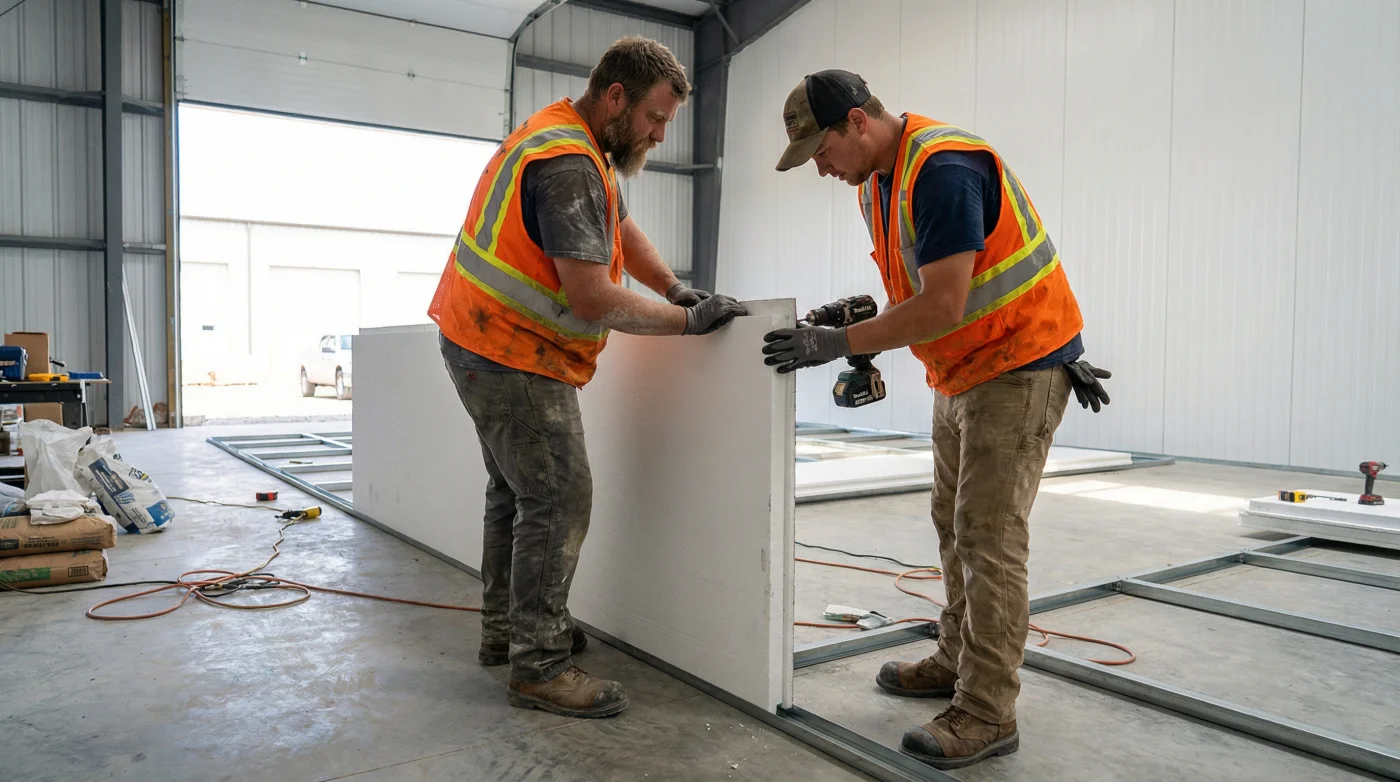
1 Prepare the Site Before Installing Panels
Most installation problems begin with poor preparation. Before any panel is lifted, ensure the site is ready:
- Floor or slab is level, clean, and dry
- All wall lines and corners are clearly marked
- There is enough space to handle and stage panels safely
- Drainage and floor finishes are completed if required
📐 Why this matters: A level base ensures panel joints align correctly. Even small floor deviations can cause gaps and sealing failures that are expensive to fix after installation.
2 Select the Correct Panel Thickness
Panel thickness must match your target temperature and usage. Installing panels that are too thin often leads to condensation, ice build-up, and higher energy consumption.
| Panel Thickness | Typical Application | Temperature Range |
|---|---|---|
| 35mm EPS | Light-duty coolrooms, display fridges, wine storage | +2 °C to +10 °C |
| 50mm EPS ★ | Standard commercial cold rooms, butchers, grocers | 0 °C to +5 °C |
| 75mm EPS | High-duty cool rooms, hot climates like SA summers | −18 °C (freezer room) |
| 100mm+ PU/PIR | Freezer rooms, deep-freeze storage | −18 °C and below |
✅ Not sure which thickness you need? Our Adelaide team will spec the right panel for your room size, ambient temperature and duty cycle.
Ask Our Team →3 Start with the First Panel (Accuracy Matters)
The first wall panel sets the alignment for the entire room. Take time to ensure it is:
- Perfectly plumb and square
- Fully supported along its base
- Correctly positioned relative to door openings
⚠️ Common mistake: Rushing the first panel is the most common cause of alignment problems across the entire build. Spend the extra 15 minutes here — it saves hours later.
4 Join Panels with Continuous Sealing
As panels are installed, joints must be sealed continuously to prevent air and moisture movement. Depending on the panel system, sealing may include:
- PU foam — for internal gaps at Z-lock joints
- Butyl tape — for vapour sealing at metal-to-metal joints
- Food-safe silicone — for external finishing and junctions
💡 Z-lock panels: Ensure Z-lock profiles engage completely along the full joint length. Partial engagement creates thermal bridges and air leaks — the biggest cause of cool room underperformance. For more detail, see our step-by-step panel joining guide.
✅ EPS Z-lock Wall Panels — interlocking joints for fast, airtight installs. In stock in Adelaide, 35mm / 50mm / 75mm.
Shop Wall Panels →5 Fix Panels Securely (Without Over-Tightening)
Panels should be fixed into appropriate framing or structural supports using corrosion-resistant fasteners. Fixings keep joints compressed and prevent movement over time.
- Typical fixing spacing: 300–400mm (project dependent)
- Use stainless or galvanised screws only
- Do not crush insulation by over-tightening
For guidance on suitable fixings and screw types, see our guide on screwing into coolroom panels.
6 Install Ceiling Panels Carefully
Ceiling joints are the most common location for condensation problems. Ensure ceiling panels are:
- Fully supported and aligned before fixing
- Sealed at every joint and corner — including wall-to-ceiling junctions
- Checked again after installation for gaps or movement
⚠️ Adelaide climate note: South Australia's high summer ambient temperatures put extra pressure on ceiling insulation. In hot climates, consider upgrading ceiling panels to 75mm even if walls are 50mm.
✅ EPS Roof/Ceiling Panels — 1000mm coverage width, custom lengths. Available from Adelaide stock.
Shop Roof Panels →7 Final Inspection and Condensation Check
Before commissioning the cold room, inspect all joints and penetrations:
- No exposed foam or crushed panel edges
- Sealant applied continuously with no breaks or gaps
- Doors, pipes, and cable penetrations fully sealed
- All aluminium channels and corner trims fitted securely
🌡️ Commission tip: Once sealed, run the refrigeration unit and record baseline temperatures and energy consumption. This gives you a benchmark to identify future performance degradation early.
Summary: Cold Room Panel Installation Checklist
| Step | Key Action | Common Mistake to Avoid |
|---|---|---|
| 1. Site Prep | Level slab, marked corners, clear staging area | Starting on an uneven floor |
| 2. Thickness | Match thickness to target temp | Using 35mm for sub-zero applications |
| 3. First Panel | Plumb, square, fully supported | Rushing alignment at start |
| 4. Sealing | Continuous PU foam + butyl tape at every joint | Spot-sealing instead of continuous bead |
| 5. Fixing | Stainless screws at 300-400mm spacing | Over-tightening and crushing insulation |
| 6. Ceiling | Full support + seal every junction | Leaving ceiling-wall corners unsealed |
| 7. Inspection | Check all penetrations before commissioning | Commissioning before final seal check |
Need Panels for Your Installation?
Cool Room Masters supplies EPS Z-lock wall and roof panels from our Adelaide warehouse — cut-to-length, fast delivery Australia-wide. Talk to our team to spec the right thickness for your project.
Get a Free Quote → Estimate Panel Quantity