

Use Case
📊
Panel comparison chart (PDF)
EPS vs PIR vs Rockwool at a glance — thermal, acoustic & fire ratings, relative cost, 50/75 mm R-values and which panel suits your project.
The Short Version
If you are under time pressure: EPS panels are the most cost-effective choice for standard food storage applications. PIR panels are mandatory when your project requires council Development Approval with fire-rated specifications — and they are worth the premium for high-turnover commercial freezers where energy savings compound over years.
Get this decision wrong and you pay twice: Either you over-specify and waste money on panels you did not need — or you under-specify and fail a building inspection, eating the cost of a full rebuild and delays to your project.
What Are EPS and PIR Panels?
EPS — Expanded Polystyrene
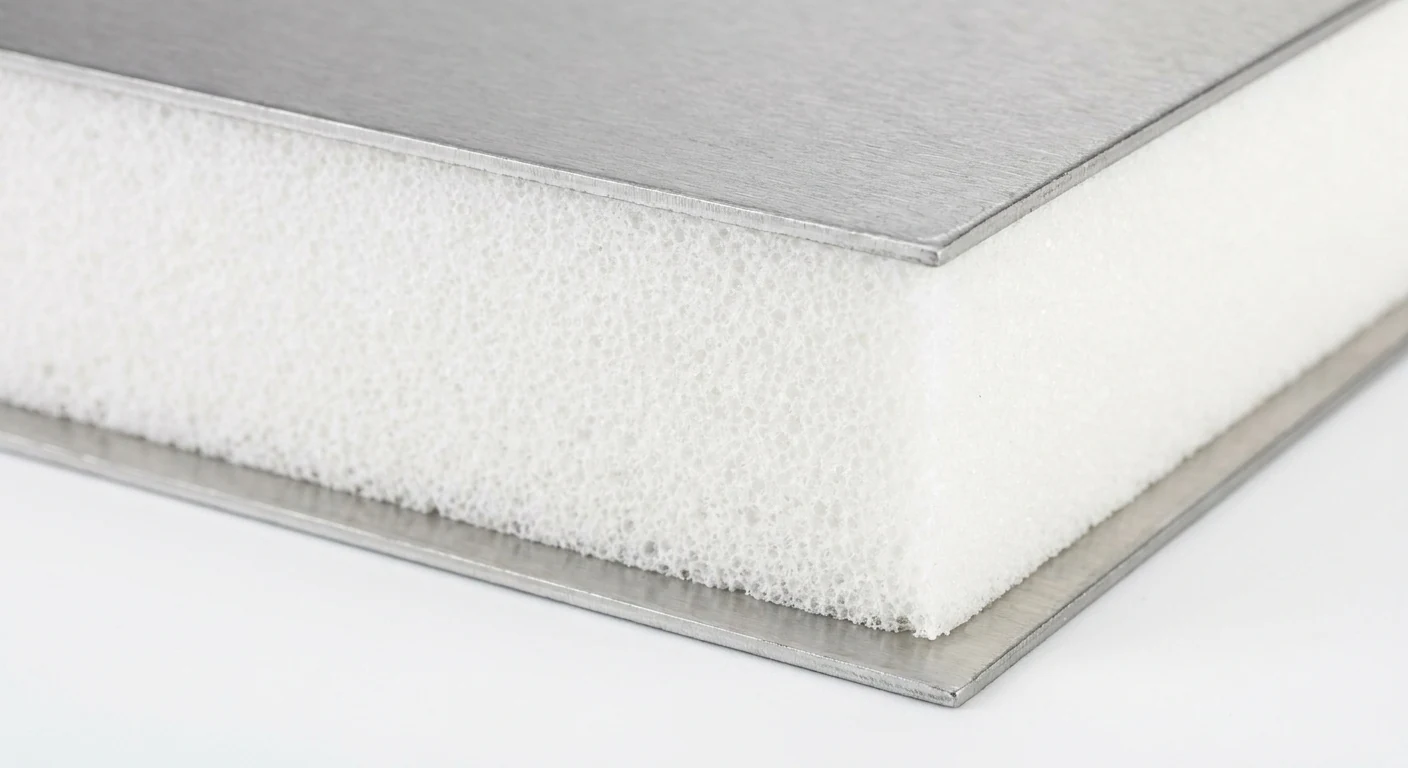
Expanded Polystyrene is the workhorse of the insulated panel world. Think packaging foam, but denser and engineered for thermal stability. The closed-cell structure traps air, which does most of the insulating work.
PIR — Polyisocyanurate
PIR undergoes a different chemical reaction during manufacture, creating a more thermally stable and fire-resistant cell structure. Same principle as EPS — better performance in two critical areas: thermal efficiency and fire rating.
Side-by-Side Comparison
| Specification | EPS Panel | PIR Panel |
|---|---|---|
| Thermal efficiency (U-value, 100mm) | ~0.35 W/m²K | ~0.30 W/m²K |
| Australian fire rating | Group 2–3 (density-dependent) | Group 1 (BCA-compliant) |
| Typical cost premium | Baseline | +20–40% |
| Weight | Lighter | Heavier |
| Moisture absorption | <3% | <1% |
| Max continuous operating temp | ~80°C | ~120°C |
The Fire Rating Issue: Why It Stops Projects
This is the single most common reason commercial cold room builds get delayed or rejected at council DA stage in South Australia.
The BCA (Building Code of Australia) Specification C1.10 sets fire requirements for buildings containing combustible materials — which includes insulated panel cold rooms. Requirements vary based on:
- Occupancy classification — food premises vs. warehouse vs. pharmaceutical
- Building height and location relative to property boundaries
- Whether the cold room is inside or attached to a larger building
EPS panels at standard densities (12–15 kg/m³) typically achieve Group 2 or Group 3 — not Group 1. PIR panels from a reputable manufacturer can achieve Group 1 with documented test certificates.
Bottom line: If your project requires Group 1 fire rating, specifying EPS will get your DA application knocked back. This is not a matter of preference — it is in the BCA.
Thermal Efficiency: Does the 15% Gap Actually Matter?
For a commercial cold room running 18 hours a day in Adelaide summer, yes — and the gap compounds over time.
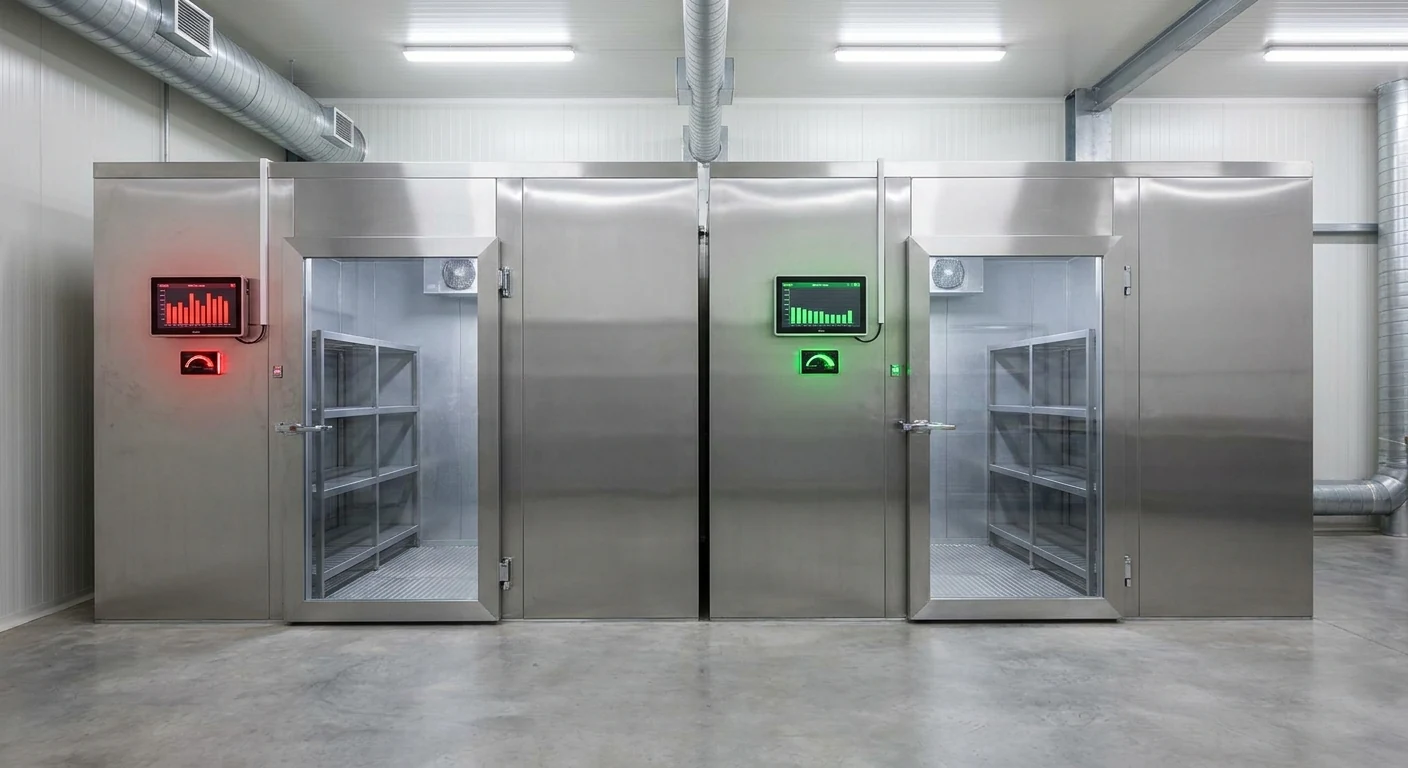
Using a 100m² commercial cool room running at +3°C against a 43°C summer afternoon design temperature (Adelaide's AS/NZS design standard):
| EPS (100mm, U=0.35) | PIR (100mm, U=0.30) | |
|---|---|---|
| Daily heat load | ~52 kWh | ~44 kWh |
| Annual energy cost (@ $0.30/kWh) | ~$5,700 | ~$4,800 |
| 5-year cumulative energy cost | ~$28,500 | ~$24,000 |
| Panel material premium (100m²) | Baseline | ~$2,800–$4,200 |
| Payback period | — | Under 3 years |
At typical commercial usage, PIR pays back its material premium within 3–5 years through energy savings alone. Before you factor in reduced compressor cycling and longer refrigeration equipment life, PIR is frequently the more economical choice over a 10–15 year project lifecycle.
Application Scenarios
Use EPS when:
- No DA fire compliance requirement — single-occupancy rural property, farm shed, not subject to BCA Section C1.10
- Small footprint — under 30m², simple layout, straightforward refrigeration
- Budget is the primary constraint — EPS is genuinely the most cost-effective solution for non-compliance-sensitive applications
- Mobile or relocatable — lighter weight makes EPS panels easier to handle and reposition
Use PIR when:
- DA fire compliance is required — any commercial food premises, shared building, or council-classified development
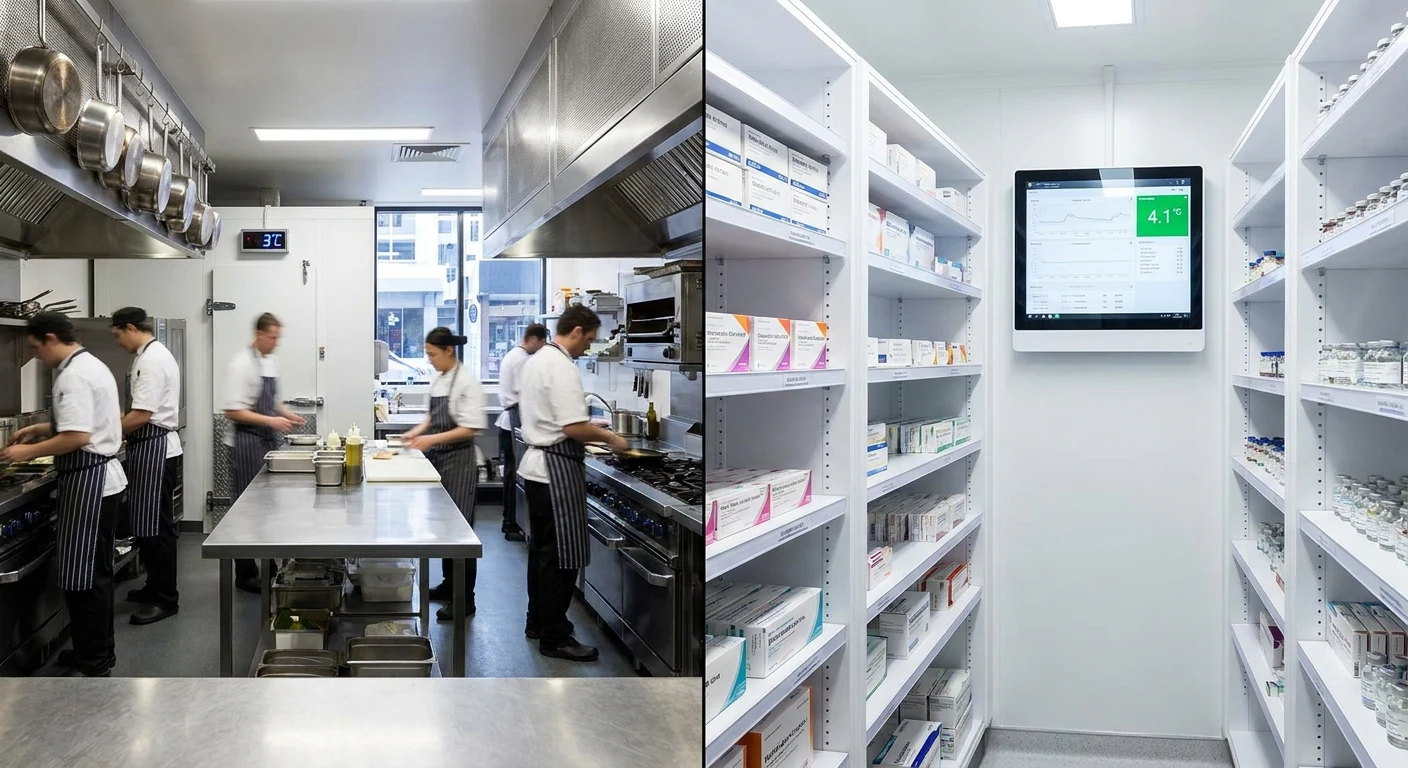
- High thermal load — busy commercial kitchens where doors open constantly, or freezer rooms with high turnover
- External exposure — Adelaide's summer UV, humidity swings, and proximity to coastal areas accelerate degradation of lesser materials
- Pharmaceutical or medical storage — temperature stability over 24 months is a regulatory requirement, not a preference
Getting Your Specification Right for Adelaide
Adelaide presents a specific set of challenges that should inform your panel specification:
Summer peak temperatures: Design to 43°C external temperature, not the 38°C that might be sufficient in Melbourne or Sydney. Under-spec your panel thickness and your refrigeration system will be fighting a losing battle from December through March.
Coastal exposure (if near the gulf): Salt air accelerates corrosion of exposed steel skins. If within 5km of the coast, specify heavier Colorbond gauge (0.7mm minimum) and check that panel joint sealants are marine-grade.
Council variation: Some Adelaide councils have additional requirements for cold rooms in commercial food premises beyond the BCA baseline. Check with your local planning officer before finalising your specification.
Documentation Checklist for Commercial DA Submissions
Whether you use EPS or PIR, your DA submission should include:
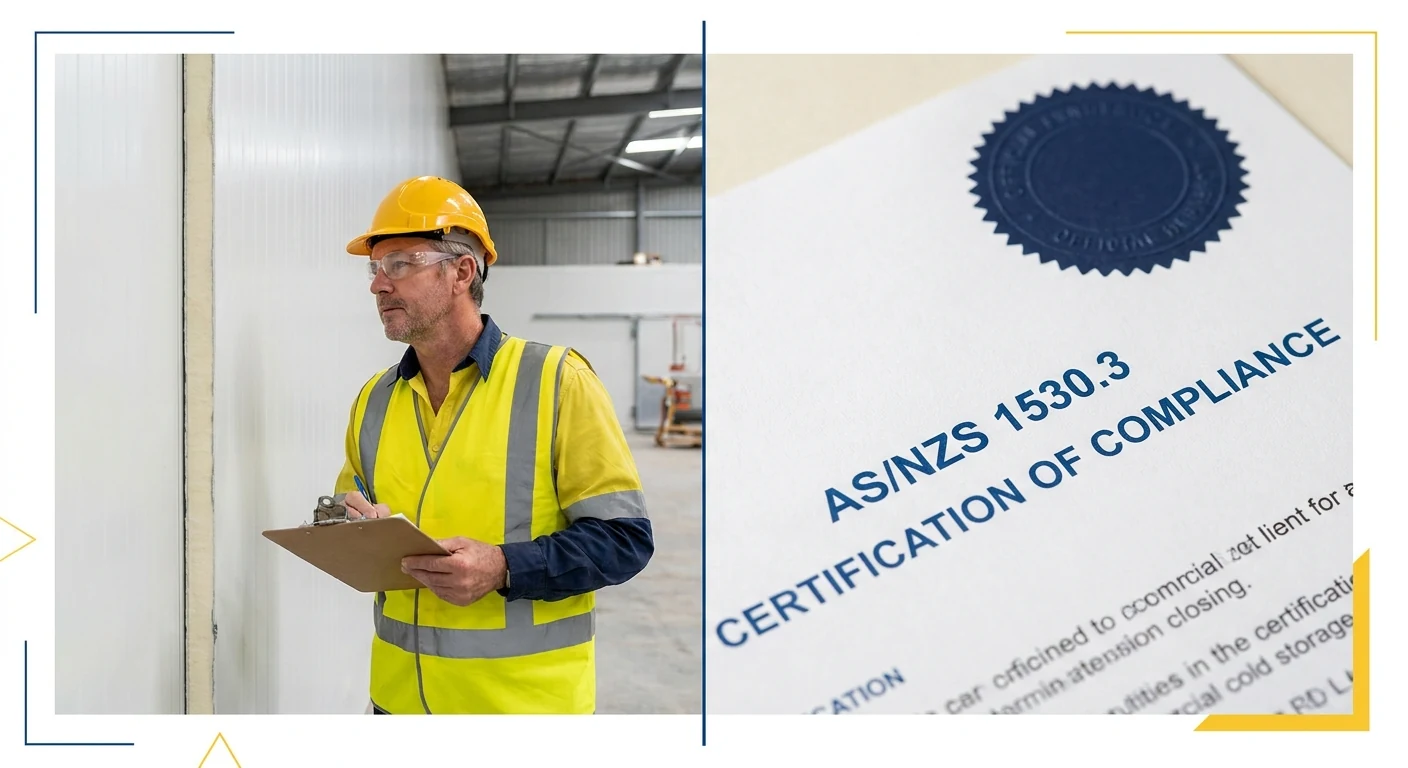
- [ ] Test certificates: AS/NZS 1530.3 for the specific panel product — not a generic datasheet
- [ ] U-value documentation: Third-party verified thermal performance data
- [ ] Fire rating certificate: From a NATA-accredited testing facility or equivalent
- [ ] Panel fixing specification: Engineering certification for wind loads and structural adequacy
- [ ] Refrigeration capacity calculation: Prepared by a licensed refrigeration mechanic, correlated to panel thermal performance
Red flag: If your supplier cannot provide items 1–3 before you sign a contract, that should be a warning sign about their documentation standards.
FAQ
Which is better value over 10 years for a busy commercial kitchen?
PIR. The energy savings alone typically exceed the upfront premium within 3–5 years. Add in the avoided cost of a council rejection if fire compliance becomes a requirement later, and PIR is the safer bet for any commercial kitchen that might one day need DA sign-off.
Can I use EPS panels for a freezer room at -20°C?
You can, but you would need 150mm minimum thickness to achieve adequate performance — at which point the cost gap between EPS 150mm and PIR 100mm narrows significantly. Run the numbers before assuming EPS is cheaper at freezer temperatures.
Do I need a refrigeration mechanic to size the system?
Yes — always. Panel thermal performance and refrigeration capacity must be calculated together. An under-specced refrigeration system running flat-out to compensate for thin panels will fail prematurely, void warranties, and cost more in power bills than the price difference between panel grades.
There is no single minimum — it depends on your storage temperature, ambient conditions, and council requirements. For a standard Adelaide commercial kitchen cool room (+2°C to +8°C), 75mm EPS or 75mm PIR is typically adequate. For a freezer room (-18°C to -25°C), 100–150mm is the practical range. Use our panel calculator for a project-specific recommendation.
Not Sure Which Panel Is Right for Your Project?
Use our free panel calculator — enter your room dimensions, target temperature, and usage pattern, and get a recommended panel specification and indicative cost estimate in under 5 minutes.
Open Panel Calculator →Contact Our Team →