

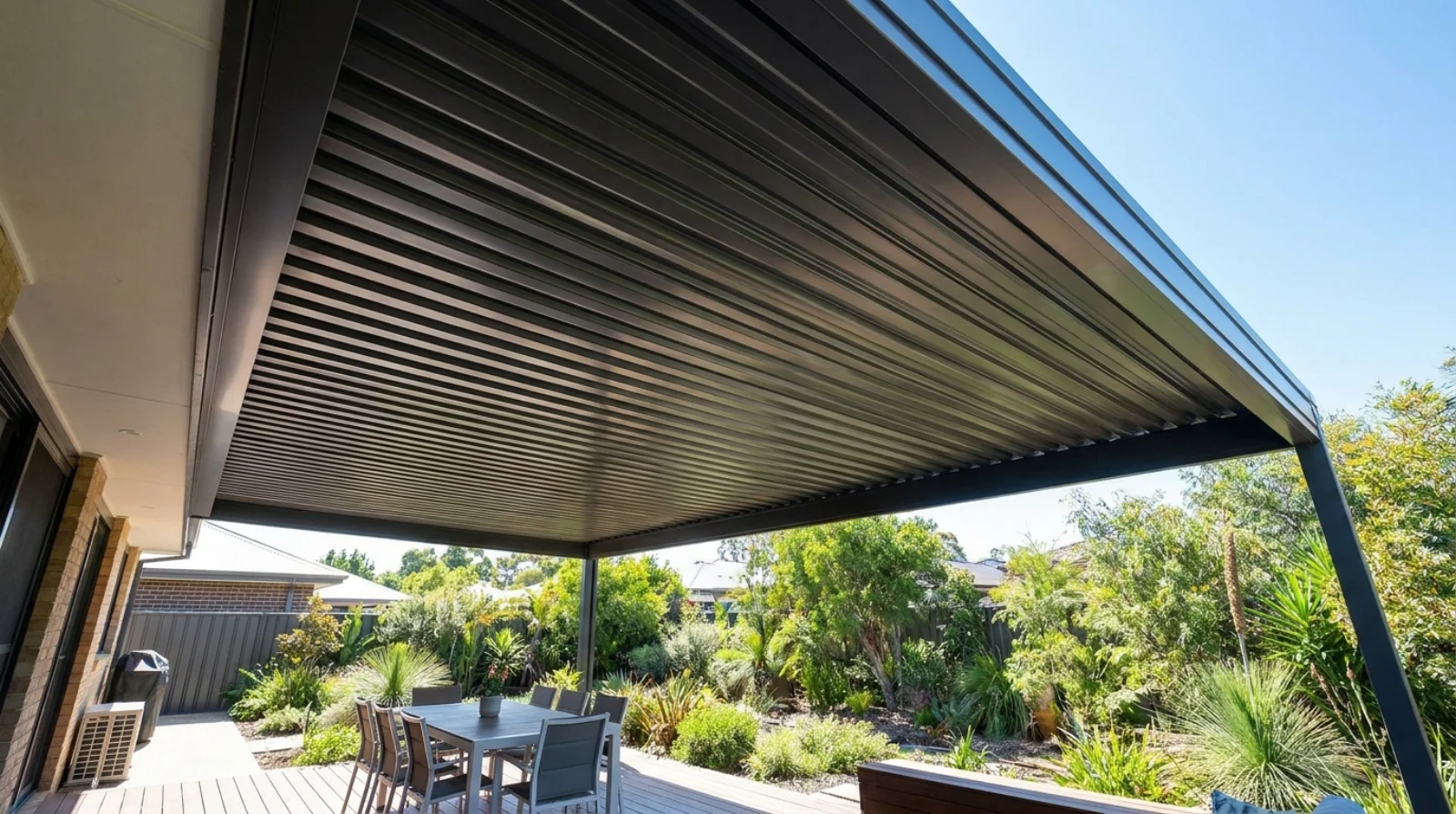
Aluminium Insulated Roof Panels
Ribbed aluminium skin bonded to a rigid PU core — roof, insulation and finished ceiling in one panel. Aluminium, not steel: it will not rust. 18mm and 45mm, two colours, Adelaide stock, delivered Australia-wide.
Get a Fast QuoteShop Panels
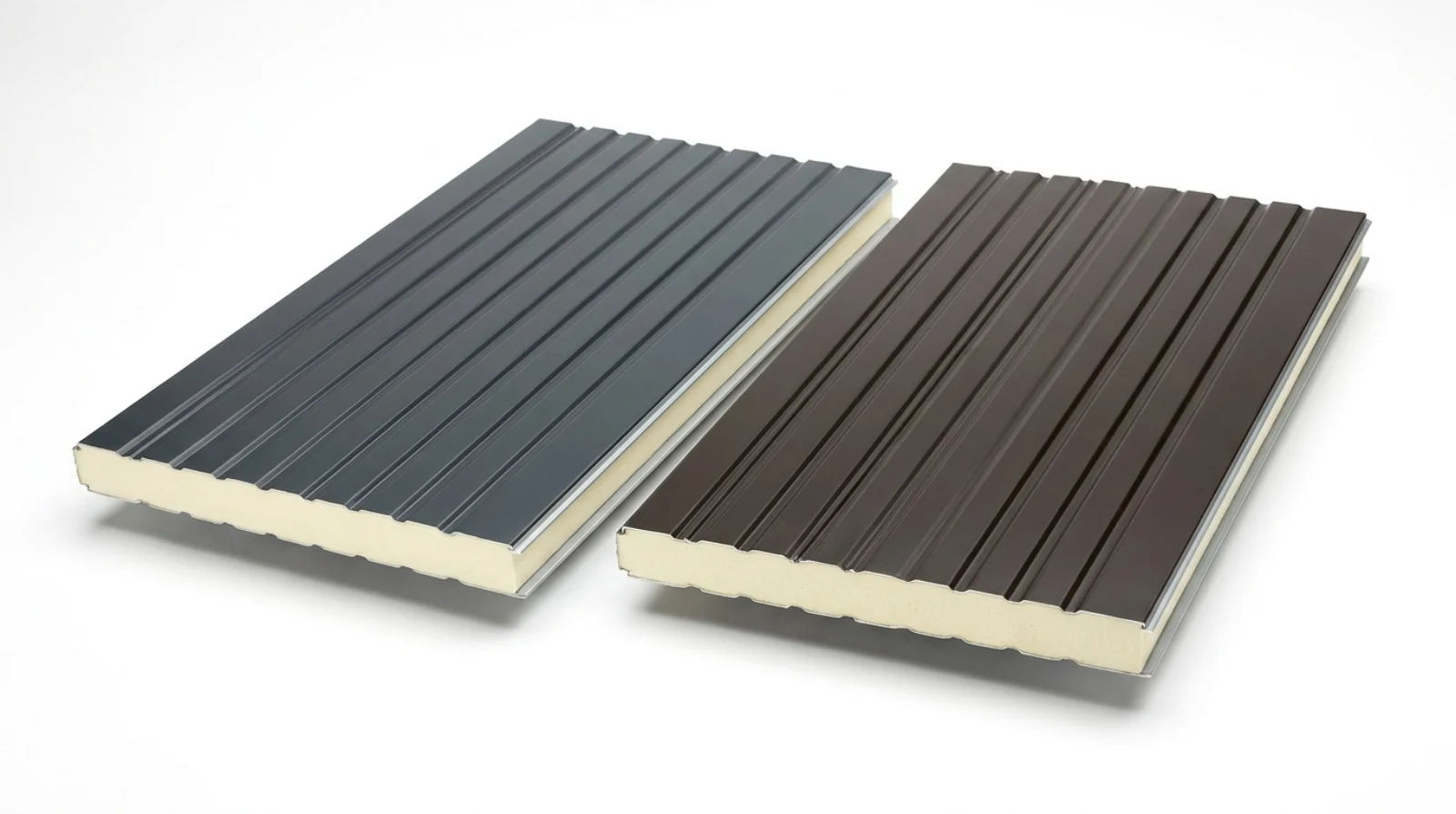
Aluminium ribbed panel, PU core
A rib-and-pan roofing panel: a ribbed aluminium weather face on top, a rigid polyurethane (PU) core bonded behind it, and a flat pan underside that finishes as a clean ceiling. One pass — roof, insulation and ceiling.
- Two thicknesses — 18mm and 45mm
- Finished underside — the pan face is your ceiling, no lining trade
- No rust, ever — aluminium, not steel
- Quieter in rain — the bonded PU core kills the drumming
Aluminium, not steel
Most insulated roofing on the market is steel. Steel rusts — and it rusts first exactly where you cut it, drill it and screw it. On a roof that lives outdoors for twenty years, that matters.
- Will not rust — aluminium self-passivates. No red bleed at cut ends, screw holes or flashings.
- Coastal-safe — salt air is what kills steel roofs in SA. Aluminium shrugs it off.
- Lighter — roughly a third the density of steel. Easier to lift, less structure needed underneath.
- Holds its finish — powder-coated aluminium keeps its colour instead of chalking and streaking.
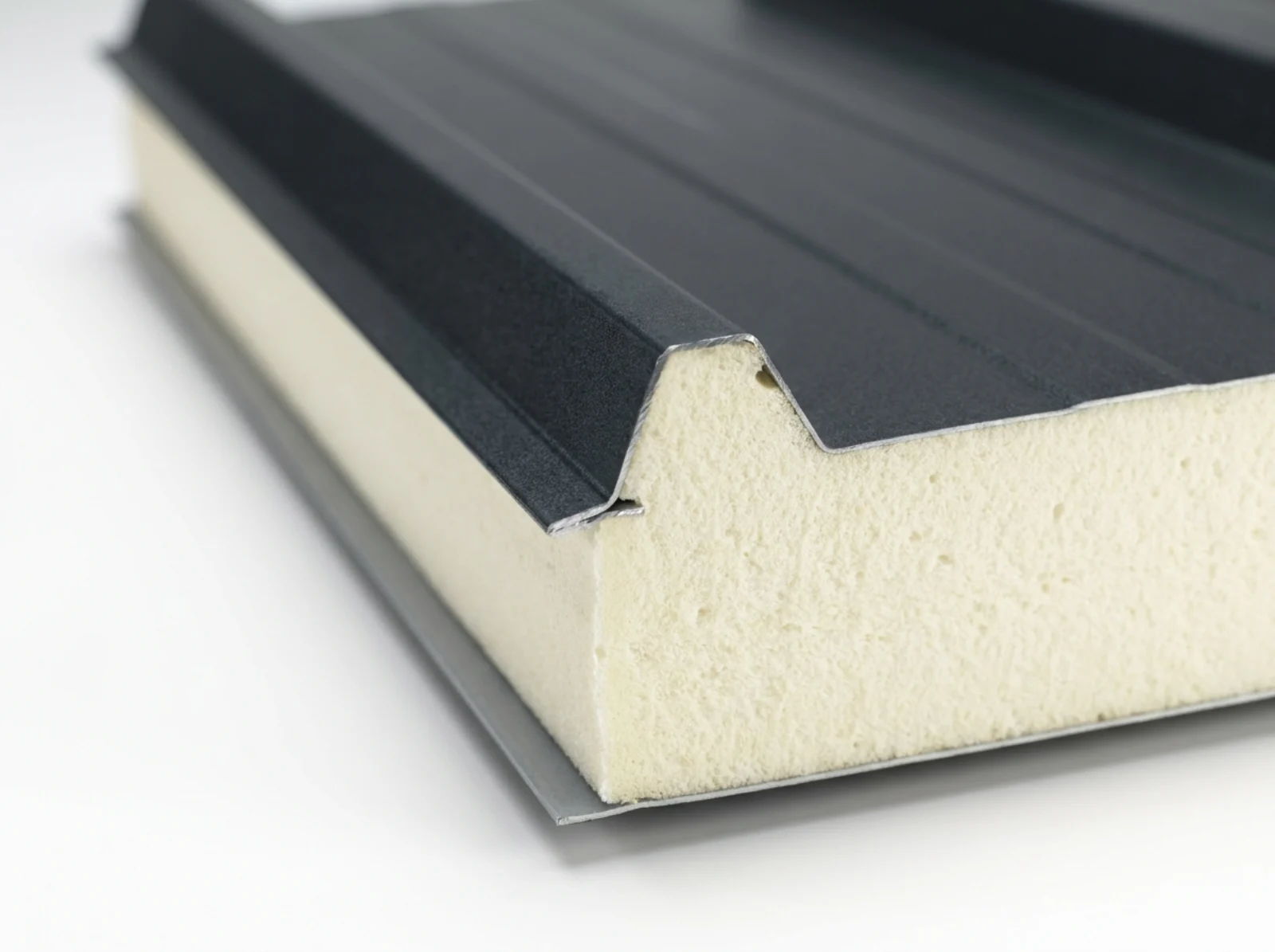
What are aluminium insulated roof panels?
Aluminium insulated roof panels are sandwich panels — a ribbed aluminium weather face bonded to a rigid PU (polyurethane) core, with a flat aluminium pan underneath. One panel does the job of roof sheeting, battens, sarking, insulation and ceiling lining. They cut radiant heat hard, so an alfresco, patio or carport stays usable through an Adelaide summer, and they go up in a single pass. You will also see this product called insulated roofing panels, sandwich roof panels, or insulated roof sheeting — same thing, different names depending on who is selling it.
Insulated roofing built for Australian summers
The roof is the surface that takes the most punishment. It is worth insulating properly.
Of every surface on a building, the roof absorbs the most direct sun. In an Adelaide summer a bare steel roof can reach well over 60°C, and every degree of that radiates straight down into the space below. That is why insulated roofing changes how a space feels far more than insulating a wall ever does.
Conventional insulated roofing is built in layers: sheeting, then battens, then sarking, then batts, then a ceiling lining. Every layer is another trade, another delay, and another chance for a gap. Batts sag. Sarking tears. Insulation gets compressed at every batten, and each of those compressions is a thermal bridge quietly leaking heat into your room.
A bonded panel removes the layers. The rigid PU core is continuous from one edge of the sheet to the other — there is nothing to sag, nothing to compress, and no gap to bridge. You get the full insulating value you paid for, on day one and in year twenty.
And because the core is bonded to the metal rather than resting behind it, insulated roofing panels are dramatically quieter in rain. If you have ever tried to hold a conversation under a bare steel patio roof during a downpour, you already understand why that matters.
Why an insulated roof panel
One panel, everything you need in a roof.
Real thermal control
The rigid PU core blocks radiant heat — and insulates around 40% better than EPS at the same thickness.
Fast to install
Roof, insulation and ceiling in one panel. Lightweight, cuts cleanly, spans between supports.
Quiet in rain
The bonded core dampens the drumming you get on bare steel roofing.
No rust
Aluminium skins shed rain and resist salt air — low-maintenance, long-life, no red streaks.
Finished ceiling
The flat pan underside is the ceiling. No separate lining trade, no gyprock.
Lightweight
About a third the density of steel — easy to handle, less structure underneath.
Perfect for
Wherever you want a cooler, quieter, rust-proof roof.
Insulated patio & alfresco roofing
The single most common use — and the one where you feel the difference immediately.
Most people who buy insulated patio roofing are trying to solve one specific problem: the outdoor area they paid good money for is unusable from December to March. Under a bare steel or polycarbonate roof, an alfresco becomes an oven by mid-morning and stays that way until sunset.
Insulated patio roof panels fix that at the source. The PU core stops the radiant heat before it ever reaches the space underneath, so the area stays in the shade it was supposed to provide. The difference is not subtle — it is the difference between using the space and avoiding it.
Three things make these panels particularly well suited to patios, verandahs, pergolas and carports:
- The underside is already finished. The flat aluminium pan is your ceiling. No gyprock, no lining trade, no exposed batten to look at from your outdoor dining table.
- You can mount to it. Downlights, fans and heaters fix straight into the panel — a clean ceiling with services in it, not a bare metal underside.
- It stays quiet. Rain on an uninsulated patio roof is loud enough to end a conversation. The bonded core absorbs most of it.
Because the panel spans between supports on its own, a patio or carport roof usually needs less structure underneath than a conventional build — fewer purlins, lighter beams, and a faster job on site.
How aluminium insulated roof panels go on
One trade, one pass. Most patio and carport roofs are a weekend.
Set your supports
Panels span between beams or purlins, so you do not need battens or sarking. Tell us your span and we will confirm the spacing.
Lay and lock
Panels lay side by side, ribs interlocking, running down the fall. Cut to length with standard tools — no specialist gear.
Fix and flash
Fix through the ribs, then flash the edges, ridge and any penetrations. The pan underside is the finished ceiling — nothing else to line.
Because the panel arrives as roof, insulation and ceiling in one, there is no sequencing between trades and no waiting on a lining crew. That is usually where the time and cost savings actually come from — not the panel price, but the days you do not spend on site.
Specifications
Short Style profile, 18mm — the panel shown above.
| Core | Rigid polyurethane (PU) foam |
|---|---|
| Facing | Aluminium — not steel, will not rust |
| Panel thickness | 18 mm |
| Visible (cover) width | 131.3 mm |
| Expanded width | 151 mm |
| Colours | Dark Grey (in stock) · Dark Coffee |
| Lengths | Cut to order — tell us your span |
Specifications are for the 18mm Short Style profile. A 45mm option is also available in a different profile — contact us for its dimensions. Talk to us about span, pitch and load before you order — or compare core materials in our EPS vs PIR vs PU guide.
Aluminium insulated panel vs. steel sheeting + battens + batts
The same roof, built two ways.
| Aluminium insulated panel | Steel sheeting + battens + insulation | |
|---|---|---|
| Layers to install | One | Sheeting, battens, sarking, insulation, lining |
| Ceiling finish | Built in (pan underside) | Separate lining trade |
| Rust | None — aluminium | Rusts at cuts, screws, coastal air |
| Thermal bridging | Continuous PU core | Gaps and compression at every batten |
| Rain noise | Dampened by the core | Loud on bare steel |
| Site time | Single pass, one trade | Multiple trades, sequenced |
Comparison is qualitative and reflects typical builds.
FAQ: aluminium insulated roof panels
Is it really aluminium, not steel?
Yes. Both faces are aluminium. That is the whole point — steel insulated roofing rusts at every cut end, screw hole and flashing, and salt air accelerates it. Aluminium does not.
What thicknesses can I get?
Two: 18mm and 45mm. The 45mm gives noticeably more insulation and stiffness; 18mm is the lighter, lower-profile option. Tell us the span and what the roof is over, and we will point you to the right one.
What colours?
Dark Grey (held in stock) and Dark Coffee.
Do insulated roof panels keep an alfresco cooler?
Yes. The rigid PU core blocks radiant heat from the sun, so the space underneath stays noticeably cooler in summer than under bare steel or polycarbonate roofing.
Do I need a separate ceiling?
No. The flat aluminium pan on the underside is the finished ceiling — no battens, no gyprock, no lining trade.
Can I install them myself?
They are light and cut with standard tools — the panel is roof, insulation and ceiling in one. Many patio and carport roofs are a weekend job with two people.
Do you deliver outside Adelaide?
Yes — we hold stock in Adelaide and freight Australia-wide. Send us your dimensions for a delivered quote.
Get a quote on aluminium insulated roof panels
Send us your roof size, span and colour. We will come back with panel spec, quantities and a delivered price.
Get a Fast Quote
